


BLACK FRIDAY IS ON! UP TO 25% OFF + FREE 7-PIECE GIFT WITH $75+

SHOP NOW

Subscribe to our newsletter

Get 10% off your first order, plus the latest updates and news!

Normal, dry to atopic skin

Dry skin: what's really going on under the surface

Reading time : 7 min

dry skin zoom

Key takeaways from this guide


  • Dry skin reflects a barrier dysfunction in which water leaves faster than it should and surface lipids fall below what the skin needs, often both at once.
  • Causes accumulate, from genetics and age to winter weather and, very often, the daily routine itself, the cleanser most of all.
  • The cleanser matters as much as the moisturizer, since conventional soap is not formulated for skin despite generations of use.
  • Ceramides play a central role in modern formulations, supported by glycerin and hyaluronic acid, and the combination counts more than any single ingredient.
  • If care does not work within a few weeks, an underlying condition may be involved, which warrants a dermatology consultation.


Dry skin is a common and uncomfortable concern. It tightens and flakes, cracks open in winter on the knuckles and shins, and sometimes itches enough to disturb sleep.
 

Most moisturizers are sold on the promise of fixing it, yet the real fix is rarely the cream itself. It is more often the cleanser, the timing of application, or an undiagnosed condition.
 

This guide covers what is happening biologically, why it progresses with age, and what to do about it. The evidence comes from peer-reviewed dermatology, and the recommendations point to what suits dry, sensitive, atopic-prone skin.


Understanding dry skin


The outer layer of the skin, the stratum corneum, works like a brick wall. The bricks are dead skin cells, and the mortar is a mix of three lipids that hold them together, namely ceramides, cholesterol and fatty acids. When the wall is intact, water stays in and irritants stay out; when it cracks, both directions go wrong.


Two things happen, mostly. Water leaves the skin faster than it should, a process dermatologists call transepidermal water loss (TEWL), and the lipids that normally seal the surface are reduced.
 

As a result, the skin feels tight, flakes more easily, and reacts to things that used to be fine, such as a new soap, a different laundry detergent or a colder office. Dryness also lowers the itch threshold, and scratching makes the barrier less effective.
 

Common causes of dry skin


Sebum production drops with age, the stratum corneum thins, and holding moisture takes more support. A primary-care study of 756 patients aged 65 or older found xerosis in 55.6% of them, with a history of atopic dermatitis showing the strongest association1.
 

The clinical term for this is xerosis cutis, and it is the single most common skin complaint in older adults, ahead of eczema and rosacea.
 

Some people are born with weaker barriers. The most studied factor is the filaggrin gene (FLG), whose loss-of-function mutations reduce the natural moisturizing factor, the molecules that keep water in the upper skin layers.
 

FLG mutations also strongly predispose to atopic dermatitis2. Up to half of people with moderate-to-severe atopic dermatitis carry at least one, develop it earlier, and experience more intense flares, while around 10% of the general population carry at least one FLG mutation2.
 

Cold dry air, indoor heating and wind all strip moisture. A literature review covering temperature and humidity effects on the barrier confirms that low humidity combined with low temperature affects barrier function and increases reactivity to mechanical stress3. Hot showers do not help either, since hot water dissolves the surface lipids much as it dissolves grease.
 

Bar soap is alkaline, whereas skin is acidic (pH around 5.5), and the mismatch matters. A 2021 review in the International Journal of Cosmetic Science set out the case clearly, showing that conventional soaps sit at pH 9-11 and affect the skin's acid mantle, while syndets (synthetic detergents) formulated at acidic to neutral pH are designed for skin compatibility<sup>4</sup>. Alcohol toners, fragrance, twice-daily antibacterial hand washes and a diet low in essential fatty acids add to this, and the impact compounds over weeks. Most fixes therefore start with the routine, not the moisturizer.
 

Effective treatments for dry skin


Bar soap is best replaced with a syndet cleanser, used with lukewarm water, in showers under ten minutes, with the skin patted dry rather than rubbed. Moisturizer is then applied within two minutes, since damp skin holds product better than dry skin, and that two-minute window matters more than the brand of cream.


A good formula combines three categories. Humectants such as glycerin, hyaluronic acid and urea at higher concentrations pull water to the surface, emollients such as squalane, plant oils and fatty alcohols smooth the skin, and occlusives slow evaporation, with petrolatum the gold standard and plant butters less effective but pleasanter to use.
 

Ceramides bridge these categories. A 2021 qualitative review of randomized trials confirms that ceramide-containing formulations raise stratum corneum lipid content and show measurable moisturizing in atopic and xerotic skin5. A fragrance-free formula is essential for dry sensitive skin.
 

If three weeks of consistent care does not improve it, the cream is not the issue, and a dermatologist has tools for the underlying conditions. Urea-based or lactic acid-based creams help with thick, rough skin, and topical corticosteroids handle inflammation when it appears. The right treatment depends on the diagnosis, so identifying the cause comes before choosing the product.
 

Choosing the right products


Three categories matter: humectants, emollients and occlusives. A good moisturizer contains at least one of each. Short ingredient lists are usually preferable, since fewer components mean fewer possible triggers. It is not a strict rule, but it is a useful starting filter.
 

Fragrance leads the list, along with essential oils, including the natural ones such as tea tree, lavender and peppermint, which are all contact sensitizers. Alcohol denat dehydrates, and it should not be confused with fatty alcohols (cetyl, stearyl), which actually moisturize. The 'sensitive skin' label on the box does not always match the contents, so the ingredient list matters more than the front of the pack.
 

A heavy balm works on the hands and feet in winter but feels uncomfortable on the face, while light creams suit the face but are not enough on dry shins. A skincare routine for dry skin works best when different textures go on different zones rather than one product for everything. Frequency matters more than amount, and a thin layer twice a day works better than an occasional thick application.
 

Home remedies and what to skip


Colloidal oatmeal calms irritation and reduces itch, and has featured in pharmacology textbooks for decades. Aloe vera gel slows water loss briefly, honey holds moisture and has mild antimicrobial action though it can trigger reactions in people sensitized to bee products, and coconut oil and shea butter work as light occlusives. None of these replace a proper moisturizer, though they can complement one.
 

What you eat affects the skin, less dramatically than skincare marketing claims, but genuinely. Omega-3 fatty acids support barrier function and can be found in oily fish, flax seeds and walnuts. Drinking water helps but does not address dry skin on its own when the barrier itself is compromised, and topical care has a more direct effect than diet.
 

Lemon juice on the face is too acidic and will burn. Baking soda affects the acid mantle, DIY sugar scrubs further weaken a barrier that is already compromised, and essential oils (tea tree, lavender, peppermint) trigger contact dermatitis often enough that dermatologists list them as common sensitizers. Untested home preparations are best kept off already-damaged skin.
 

very dry skin zoom

Building a daily ATODERM routine for very dry skin


Very dry skin reflects a barrier that loses water too fast and lacks surface lipids, so the routine that repairs it combines gentle cleansing with consistent moisturizing. The cleanser matters as much as the cream, and fragrance-free formulas limit the triggers that keep dry skin reactive.
 

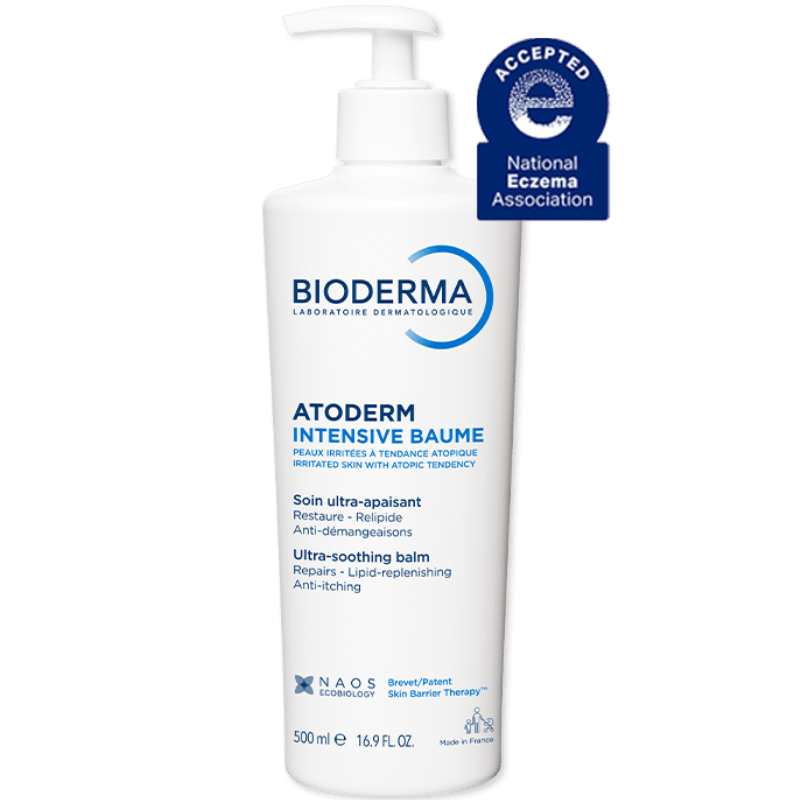
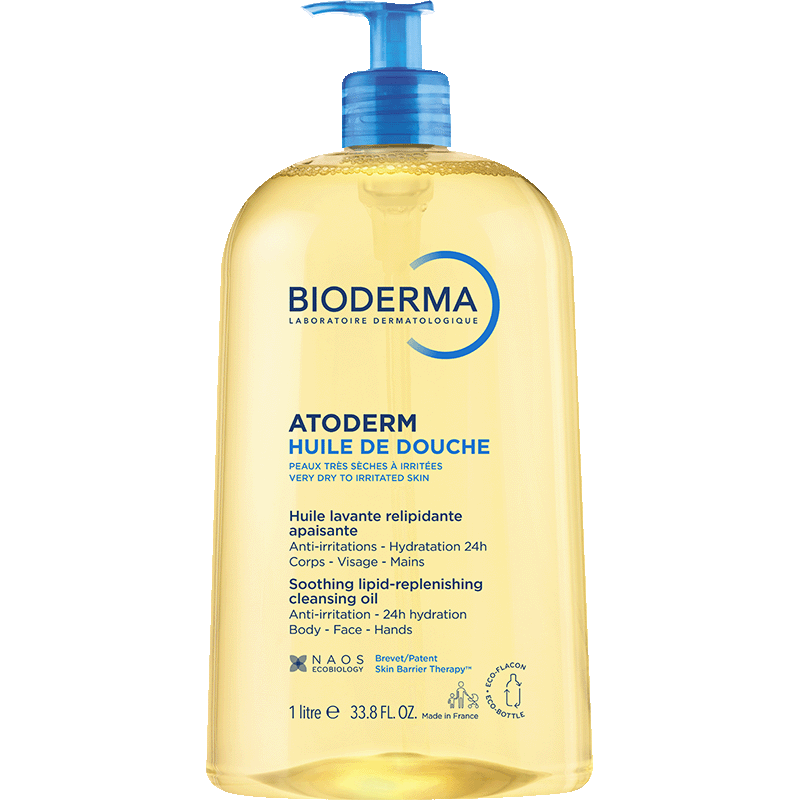
Within the ATODERM range, Atoderm Shower Oil cleanses without stripping the barrier and increases skin hydration by 26% after 27 days of use, an effect that can reach 39%. For very dry to atopic skin, Atoderm Intensive Balm replenishes lipids and carries the National Eczema Association Seal of Acceptance. Both are fragrance-free.


Common questions about dry skin


Why is my skin so dry even when I moisturize?


Three reasons usually explain it. The moisturizer may not be adapted to the intensity, since light lotions are not enough for very dry skin. The timing may be wrong, as applying it on fully dry skin locks in less water than on slightly damp skin. Most often, the cleanser is undoing the work, since a harsh soap used twice a day strips more lipids than any cream can replace. Reviewing the whole routine, not just the moisturizer, solves most cases.


Can dry skin be a sign of something serious?


Most of the time, no, since most dry skin is harmless and barrier-related. Persistent or intense dryness with other symptoms is different, and can point to conditions such as hypothyroidism, diabetes, atopic dermatitis, ichthyosis or kidney disease. Dryness accompanied by intense itching, visible inflammation, weight changes or fatigue is a reason to consult a doctor.


How often should I moisturize?

Twice a day, every day, after cleansing, once in the morning and once in the evening. Some people benefit from a third application in winter or after hand washing. Consistency matters more than quantity, and two thin layers a day work better than the occasional thick application.


Scientific references


  • Paul C, Maumus-Robert S, Mazereeuw-Hautier J, Guyen CN, Saudez X, Schmitt AM. Prevalence and risk factors for xerosis in the elderly: a cross-sectional epidemiological study in primary care. Dermatology. 2011;223(3):260-265. https://pubmed.ncbi.nlm.nih.gov/22104182/
  • Drislane C, Irvine AD. The role of filaggrin in atopic dermatitis and allergic disease. Ann Allergy Asthma Immunol. 2020;124(1):36-43. https://pubmed.ncbi.nlm.nih.gov/31622670/
  • Engebretsen KA, Johansen JD, Kezic S, Linneberg A, Thyssen JP. The effect of environmental humidity and temperature on skin barrier function and dermatitis. J Eur Acad Dermatol Venereol. 2016;30(2):223-249. https://pubmed.ncbi.nlm.nih.gov/26449379/
  • Hawkins S, Dasgupta BR, Ananthapadmanabhan KP. Role of pH in skin cleansing. Int J Cosmet Sci. 2021;43(4):474-483. https://pubmed.ncbi.nlm.nih.gov/34137035/
  • Kono T, Miyachi Y, Kawashima M. Clinical significance of the water retention and barrier function-improving capabilities of ceramide-containing formulations: A qualitative review. J Dermatol. 2021;48(12):1807-1816. https://pubmed.ncbi.nlm.nih.gov/34510527/


Author


Content written by the BIODERMA USA editorial team and medically reviewed by Anaïs Caldirola, Medical lead at NAOS, ensuring accuracy and scientific reliability. Medical information is based on established dermatological knowledge and peer-reviewed sources.