FRIENDS & FAMILY | 20% OFF SELECTED PRODUCTS + FREE POUCH $75+ SHOP NOW

What are micelles? The science behind gentle cleansing

Reading time : 10 min

micelles

What are micelles? The science behind gentle cleansing

 
Micelles are tiny, invisible cleansing spheres so small that 800 of them could fit across a single strand of human hair, yet they are responsible for one of the most effective and gentle cleansing experiences in skincare. They form naturally when certain molecules meet water, creating a structure that attracts oil while remaining fully compatible with water, allowing them to help lift away makeup, sebum, and daily impurities without requiring rinsing.  
 

Laboratoire Bioderma was the first brand to harness micelles for everyday skincare, pioneering micellar water in 1995. But micelles go far beyond cleansing: they play essential roles in the human body and in medicine, making them one of science's most versatile structures. Here is everything you need to know.


Key takeaways from this guide


  • Micelles are tiny invisible cleansing spheres that attract and lift away dirt, oil, and makeup.
  • They form naturally when certain molecules are mixed with water above a specific concentration.
  • Different types of micelles serve different functions in skincare and science.
  • Understanding how micelles work helps explain why micellar-based cleansers are so effective and gentle.
  • Micellar technology is suitable for all skin types, including sensitive and reactive skin.


What are micelles?


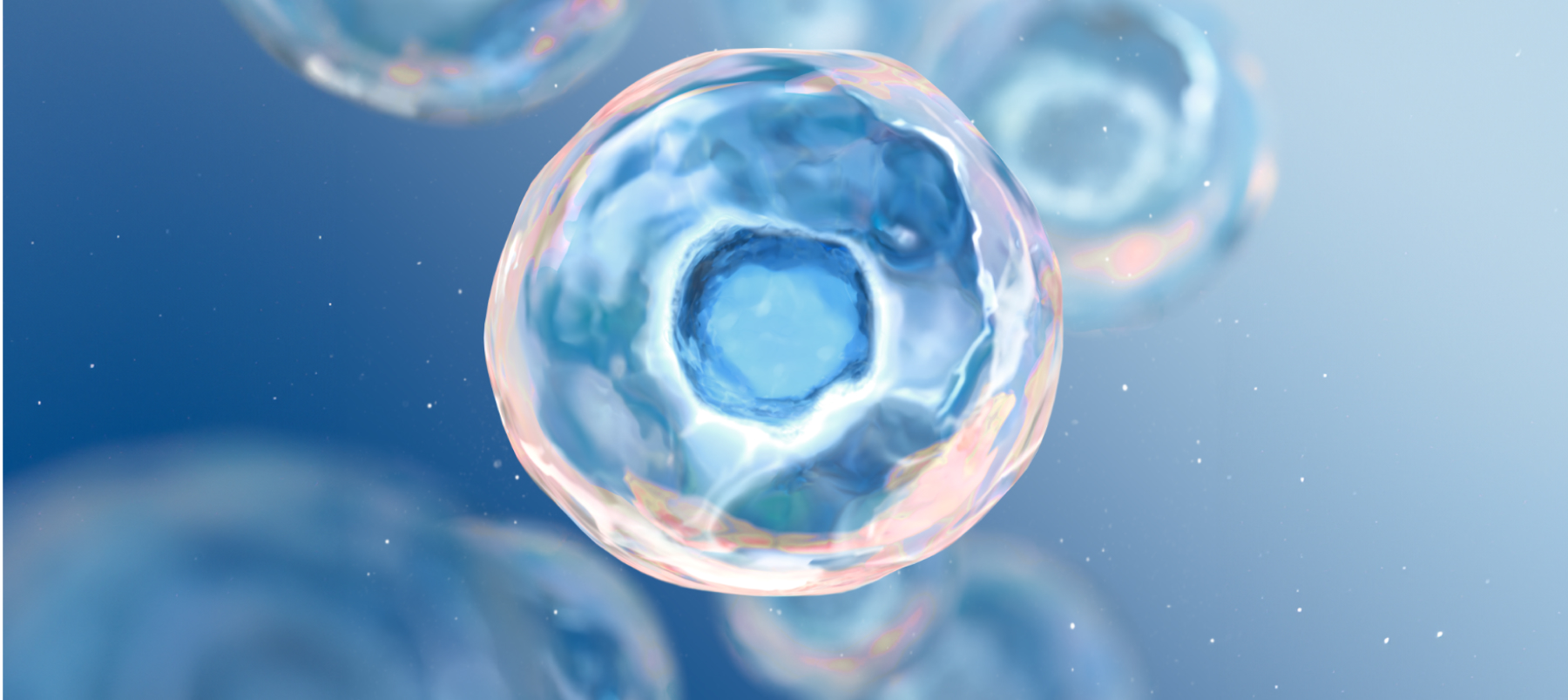
A micelle is a tiny spherical structure, invisible to the naked eye, that forms when certain molecules are mixed with water.
 

These molecules, known as amphiphilic molecules, have one part that is attracted to water and one part that repels it. When enough of them are present in a solution, they naturally arrange themselves into a sphere. The water-attracting part faces outward, while the oil-attracting part tucks itself inside.
 

The result is a stable, self-contained structure that can hold onto oily substances inside while remaining fully compatible with water on the outside. That is what makes micelles so effective at cleansing without disrupting the skin.
 

Micelles are far more than a laboratory concept. They show up in three key areas of science and daily life:

  • In the body: micelles form naturally in the gut during digestion, helping break down and absorb fats and fat-soluble vitamins. This process is remarkably efficient: the intestinal absorption rate of fatty acids in humans exceeds 90%, compared to only around 50% for cholesterol.1
  • In medicine: micellar drug delivery systems can enhance the oral bioavailability of certain medications by up to 50 times compared to conventional formulations, opening significant new possibilities in pharmaceutical science.2
  • In skincare: micelles are the active cleansing agents behind micellar water, lifting away makeup, sebum, and daily impurities cleanly and gently.
     

Structure and formation of micelles


To understand why micellar cleansers work so differently from traditional soaps, it helps to look at the molecules behind them.


Amphiphilic molecules have a split personality: one end is hydrophilic, meaning it is attracted to water, while the other end is hydrophobic, meaning it actively avoids water and is drawn to oils and fats. In water, the hydrophobic ends cluster together to escape the surrounding water, hiding their oil-loving tails inside a sphere while their water-loving heads face outward.


That sphere is a micelle, and it is the reason a single swipe of micellar water can remove what water alone never could.
 

What makes micelles particularly remarkable is that they form entirely on their own, with no heat, no harsh chemicals, and no mechanical action required.


When amphiphilic molecules are added to water, they initially sit at the surface. Once enough molecules are present, a threshold known as the critical micelle concentration, they have no more room at the surface and begin forming spherical micelles in the solution instead. These structures are incredibly small, typically ranging from 10 to 100 nanometers in size.3


It is precisely this spontaneous, chemical-free formation that allows Bioderma to formulate cleansers that are both genuinely effective and exceptionally gentle on the skin.
 

Types of micelles


Regular micelles are the type most relevant to skincare and everyday cleaning products. They form in water, with the hydrophilic heads of the molecules facing outward toward the surrounding water and the hydrophobic tails clustered together on the inside. This arrangement creates a core that can trap and hold oily substances including dirt, sebum, and makeup, while the outer shell remains fully compatible with water, making it easy to rinse or wipe away. Regular micelles are dynamic structures, constantly forming and dissolving in response to the concentration of molecules in the solution, which is why they are so effective at continuously capturing impurities during cleansing.
 

Inverse micelles work in the opposite way. They form in oil-based or non-polar environments rather than in water, with the hydrophobic tails facing outward and the hydrophilic heads tucked inside. This allows them to encapsulate water-soluble substances within an oily environment. While less relevant to daily skincare cleansing, inverse micelles are used in specialized applications including certain drug delivery systems and industrial processes where water-soluble compounds need to be transported through non-polar environments. In summary : 

  • Regular micelles: form in water, hydrophilic heads outside, ideal for cleansing
  • Inverse micelles: form in oil-based environments, hydrophobic tails outside, used in specialized applications
     

Critical micelle concentration


Behind every effective micellar cleanser is a precise formulation decision: getting the concentration of cleansing molecules exactly right. Critical micelle concentration, or CMC, is the tipping point at which micelles begin to form. Below this concentration, amphiphilic molecules exist individually in a solution, scattered and unable to form the organized spherical structures that make cleansing possible. 


Behind every effective micellar cleanser is a precise formulation decision: getting the concentration of cleansing molecules exactly right. Critical micelle concentration, or CMC, is the tipping point at which micelles begin to form. Below this concentration, amphiphilic molecules exist individually in a solution, scattered and unable to form the organized spherical structures that make cleansing possible. 


Once the concentration reaches the CMC, they spontaneously come together and micelles form. Think of it like a crowd: below a certain number of people, everyone stands separately. Once enough people arrive, they naturally start to cluster together. Without reaching this threshold, even the most carefully chosen ingredients cannot do their job.
 

The CMC directly affects how well a cleansing product performs and, crucially, how gentle it is on the skin. CMC is an important formulation parameter that influences micelle formation and the behavior of surfactants in a cleansing formula. This is not a minor detail: for anyone with sensitive, reactive, or easily disrupted skin, the difference between a formula that sits just above its CMC and one loaded with excess surfactants can be the difference between comfortable cleansing and irritation.  


Bioderma's micellar technology is built around exactly this principle, using a single carefully selected surfactant at the right concentration to form effective micelles while keeping the formula as gentle as possible. It is the science of doing more with less, and it is what sets a true micellar formula apart from a basic cleanser.
 

How micelles work in skincare


Micellar water as a skincare product did not exist before Laboratoire Bioderma created it in 1991. Working alongside dermatologists and guided by the principles of ecobiology, meaning acting with the skin's biology rather than against it, Bioderma developed a formula built around a specific fatty acid ester called glycerol ester. This biomimetic ingredient closely mirrors the skin's own natural lipids, designed to provide gentle cleansing for sensitive skin.  


The formula uses highly purified water with a physiological pH, meaning it matches the skin's natural acidity. That is why no rinsing is needed. Unlike tap water, which contains calcium and chlorine that can irritate the skin, Bioderma's micellar water is hypoallergenic, free from alcohol and parabens, and respects the skin's hydrolipidic film, the protective layer that keeps moisture in and irritants out. Today, one bottle of Sensibio H2O is sold every second worldwide. 
 

In micellar water, micelles are the active cleansing agents. Each micelle has two key characteristics:

  • A hydrophilic head that is water-soluble and faces outward toward the solution
  • A lipophilic tail that attracts oily materials and is incompatible with water

When a cotton pad soaked in micellar water is swept across the skin, the lipophilic tails attach to oily impurities including sebum, makeup, pollution residue, sweat, and dead skin cells. The impurities are captured inside the micelle and transferred onto the cotton pad, leaving the skin clean without any need for rinsing or rubbing.

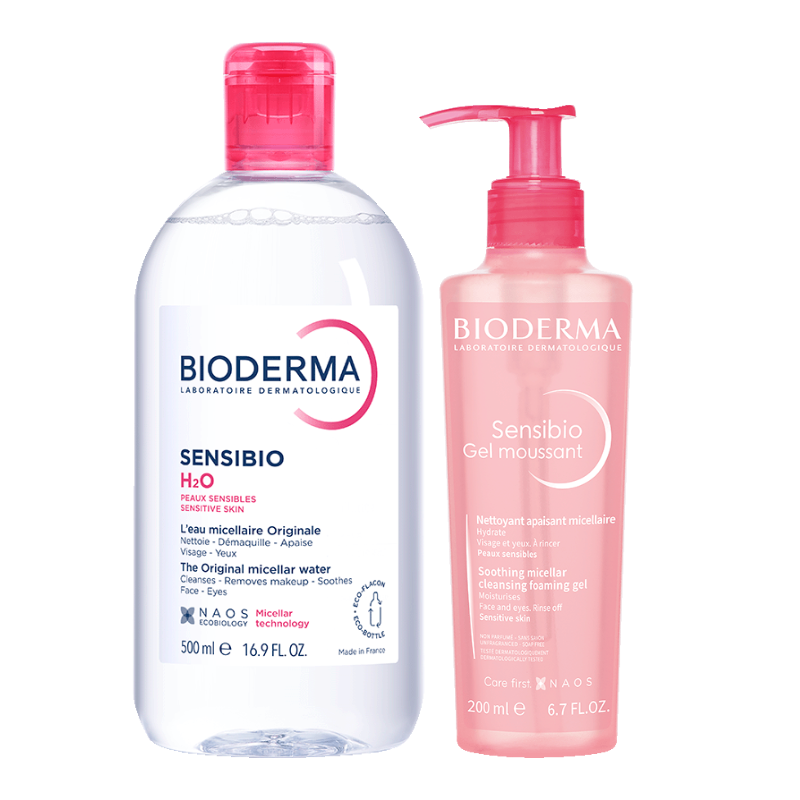
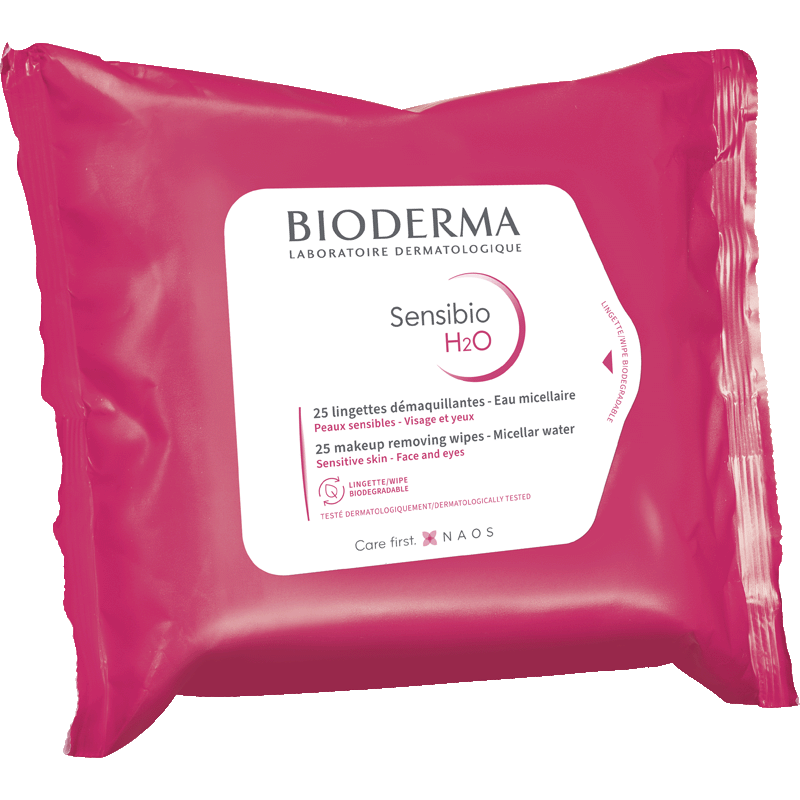
Bioderma's Sensibio H2O Micellar Water was the first micellar water ever created and remains the reference product for sensitive skin cleansing worldwide. To understand more about how to incorporate it into your routine, read our guide to micellar water and its benefits.
 

Micellar technology is not limited to micellar water. Cleansing oils and foaming gels harness the same science, each in a slightly different way.


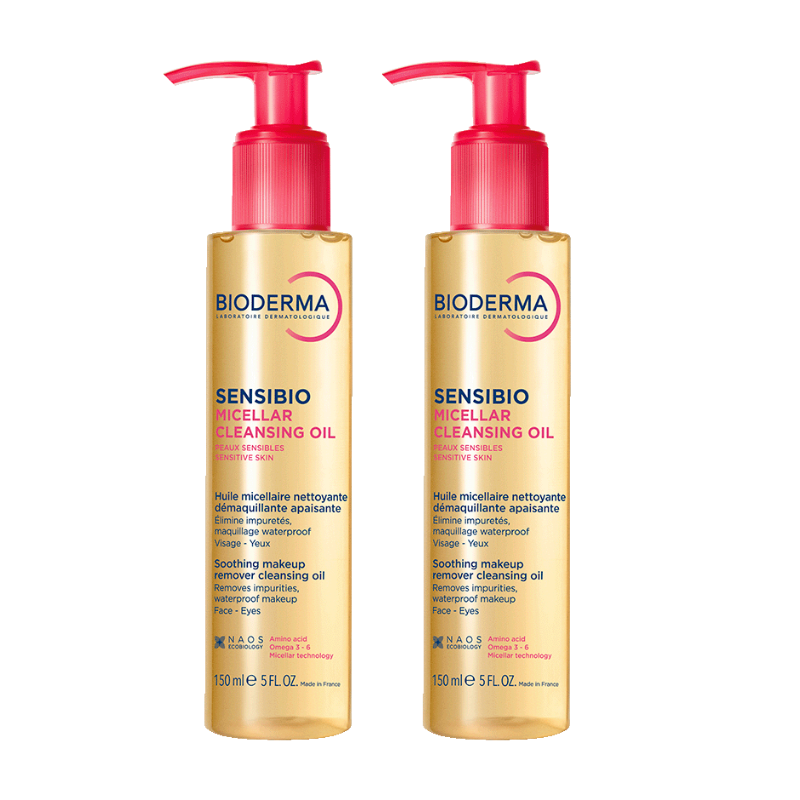
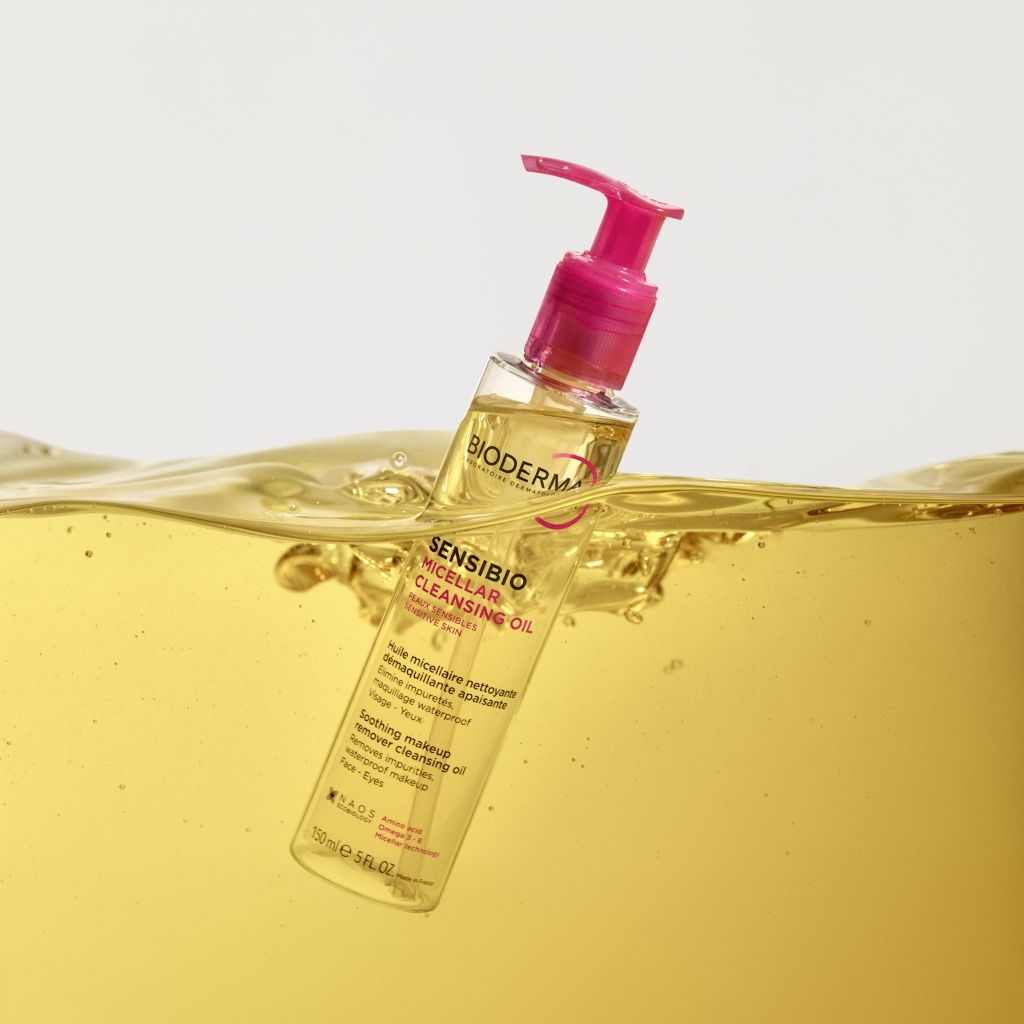
In a cleansing oil, the oil-based formula dissolves makeup and impurities on contact, making it particularly effective for waterproof or long-wear products. When water is added, the oil emulsifies and rinses away cleanly, taking captured impurities with it. A micellar foaming gel creates a light lather in which micelles surround and lift dirt and excess oil from the skin's surface, leaving it fresh and balanced without over-stripping.


Both formats work well as part of a double cleansing routine:

  • Step 1: an oil-based cleanser to dissolve makeup and deeply embedded impurities
  • Step 2: a water-based cleanser to refresh and balance the skin
     

Why choose micellar-based cleansing?


One of the most important qualities of micellar-based cleansing is what it does not do.

Unlike traditional soaps and many foaming cleansers, micellar formulas are designed to cleanse while helping maintain skin comfort. Because micelles work by attracting and capturing impurities rather than aggressively dissolving everything they contact, they clean selectively and gently.


The results are measurable. In a clinical study evaluating micellar solution on reactive skin, improvement in unpleasant skin sensations was observed in participants as early as two days after starting use, with participants reporting improvements in unpleasant skin sensations during the study.4


The result is skin that feels clean but not tight, balanced but not dry. For guidance on building a gentle, effective daily cleansing routine, our guide to how to wash your face offers practical, expert-backed advice.
 

Sensitive skin is far more common than many people realize. Research shows that approximately 60 to 70% of women and 50 to 60% of men report having some degree of skin sensitivity, making gentle cleansing formats not just a preference but a genuine skin health need for a significant share of the population.5


Bioderma's micellar formulas are built around a single carefully selected surfactant, a physiological pH, and biomimetic ingredients that mirror the skin's own composition. Here is how they work for different skin types:


  • Sensitive skin: the no-rinse format avoids exposure to tap water's potentially irritating minerals
  • Oily skin: thorough removal of excess sebum without triggering compensatory oil production
  • Dry and dehydrated skin: no harsh surfactants that would compromise the skin barrier further
  • Makeup wearers: effective, complete removal without the harsh rubbing that can cause long-term irritation


Whatever your skin type, micellar technology adapts to your needs without ever working against your skin.
 

Bioderma micellar products to try


Now that you understand the science, here is how it translates into Bioderma's lineup.

Sensibio H2O Micellar Water remains the original and most iconic application of micellar technology, gently removing makeup and impurities without rinsing.

For a foaming alternative, Sensibio Foaming Gel uses the same micellar science in a lathering format, ideal for those who prefer a more traditional cleansing feel.
 

If you wear makeup regularly or need a more thorough first cleanse, Sensibio Micellar Cleansing Oil dissolves stubborn and waterproof products effectively, making it a strong first step in a double cleansing routine.
 

Each format relies on the same underlying micelle technology explored throughout this guide, simply adapted to different textures and skin needs.


Frequently asked questions


Micelles are tiny spherical structures formed by amphiphilic molecules in water. They have a hydrophilic outer shell and a lipophilic core, giving them the ability to attract and hold onto oily substances while remaining compatible with water.
 

Yes. Micelles are the active cleansing agents in micellar water. They are tiny invisible spheres with an oil-attracting core and a water-attracting outer shell, which allows them to capture and lift away impurities when swept across the skin with a cotton pad.
 

Micelles form spontaneously when amphiphilic molecules in a solution reach a specific concentration threshold called the critical micelle concentration. At this point, the molecules organize themselves into spheres to minimize contact between their oil-attracting tails and the surrounding water.
 

Micelles encapsulate and remove hydrophobic substances such as oils, makeup, and impurities from the skin's surface. In the body, they also play a key role in fat digestion and the absorption of fat-soluble vitamins.
 

Micellar water is formulated with highly purified water at a physiological pH, biomimetic ingredients, and no alcohol or parabens. It requires no rinsing, which avoids exposing the skin to tap water minerals. The micelles clean gently without stripping the skin's natural protective film, making it suitable for a gentle cleansing routine for sensitive skin.
 

Bioderma invented micellar water in 1995 and built their formula around glycerol ester, a biomimetic ingredient whose composition closely mirrors the skin's natural lipids. Combined with highly purified water at a physiological pH, no alcohol, and no parabens, Bioderma's micellar water is formulated for gentle cleansing without requiring rinsing and is designed for sensitive skin.
 

Scientific references


1 - New insights into the molecular mechanism of intestinal fatty acid absorption 
(PMC / NIH – Wang TY et al., 2014) 
https://pmc.ncbi.nlm.nih.gov/articles/PMC3996833/ 
 

2 - Exploring the application of micellar drug delivery systems in cancer nanomedicine 
(Pharmaceutics – Wang Q et al., 2023) 
https://pmc.ncbi.nlm.nih.gov/articles/PMC10052155/ 
 

3 - A review of polymeric micelles and their applications 
(Pharmaceutics – Perumal S et al., 2022) 

https://pmc.ncbi.nlm.nih.gov/articles/PMC9230755/
 

4 - Interest in micellar solution to reduce unpleasant skin sensations 
(PMC / NCBI – Taieb Charles et al., 2021) 

https://pmc.ncbi.nlm.nih.gov/articles/PMC8403560/
 

5 - The prevalence of sensitive skin 
(Frontiers In Medicine – Farage Miranda A., 2019)
 
https://pmc.ncbi.nlm.nih.gov/articles/PMC6533878/  


Author

Content written by the BIODERMA USA editorial team and medically reviewed by Anaïs Caldirola, Medical lead at NAOS, ensuring accuracy and scientific reliability. Medical information is based on established dermatological and nutritional references