


Skin elasticity is the skin's ability to stretch and bounce back. It declines gradually, in five stages closely tied to hormonal shifts, collagen breakdown and dermal density loss. This article explores what happens at each stage, why sensitive skin often shows the signs sooner, and how to adapt skincare from the late 30s through post-menopause.
Skin elasticity through every stage: what to expect and when to act
Reading time : 8 min
Key takeaways from this guide
Collagen production drops by about 1% per year from the mid-20s onward
Sensitive skin reveals signs of elasticity loss earlier due to a compromised barrier
Peri-menopause and menopause mark the most visible acceleration
Up to 30% of dermal collagen can be lost in the first 5 years post-menopause
Barrier repair, hydration and inflammation control matter at every stage
A dermatologist consultation is recommended when at-home care is no longer enough
What is skin elasticity?
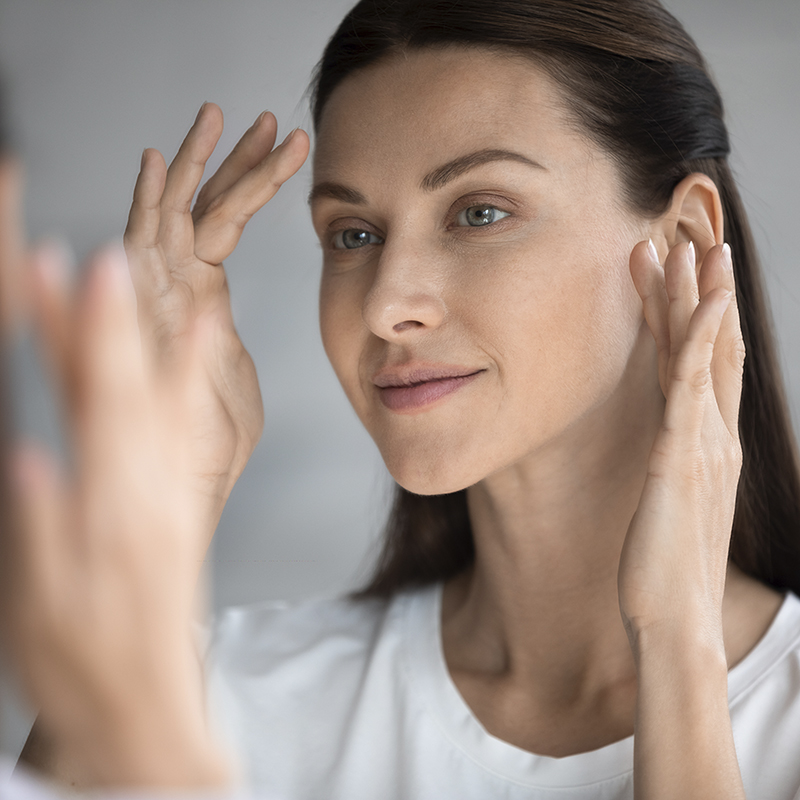
Skin elasticity comes from two structural proteins: collagen and elastin, woven throughout the dermis. Together, they allow the skin to stretch and return to its original shape. When this network weakens, the skin loses its bounce, sags more easily and creases more deeply.
Early signs of reduced elasticity often appear subtly:
Fine lines that linger longer after smiling or frowning
A jawline that feels less taut in the morning
Slight hollowing near the temples
Makeup that settles into expression lines
A pinch of skin that takes longer to bounce back
Gently pinch the skin on the back of the hand for a few seconds, then release. Healthy elastic skin returns to normal in under 2 seconds. A delayed recovery is a sign that elastin breakdown has begun.
Collagen production gradually declines with age, while existing collagen fibers become structurally fragmented and disorganized over time¹. By the time sagging is obvious, dermal density has often already dropped significantly. Acting early means preserving, not reversing.
Why sensitive skin shows the signs earlier
Sensitive skin often reveals the first signs of reduced firmness sooner. The reason lies in barrier function. A compromised protective layer loses water faster, repairs itself more slowly and stays in a state of low-grade inflammation, a process known as inflammaging, which directly accelerates collagen and elastin breakdown2.
Sensitive skin is far from a marginal case. Surveys show that 60 to 70% of women report some degree of sensitive skin, with reactivity to cosmetics, climate or stress3.
On reactive skin types, the first signs of elasticity loss tend to surface around age 35 instead of 40. The skin around the eyes or mouth may sag earlier, simply because it has been working harder to maintain balance. Sensitive skin does not age faster by nature — it has less reserve capacity to mask what is happening underneath.
Stage 1, late 30s: the first subtle signs
Between 38 and 40, skin elasticity begins shifting in ways often dismissed as fatigue or dehydration. The skin takes longer to smooth out after a night on one side. Expression lines remain faintly visible at rest. Fibroblasts still function well, but they are slowing down.
Three biological shifts are at work:
Elastin fibers begin to fray and lose their spring-like structure
Microcirculation decreases, slowing nutrient delivery to skin cells
The cell renewal cycle, once 28 days, may stretch to 35 or more
This is the supporting window. Daily hydration, antioxidant ingredients and broad-spectrum SPF form the base. Gentle support for collagen synthesis through retinoids or peptides can slow visible changes without overwhelming sensitive skin. The goal is not reversal, it is preservation.
Stage 2, early 40s: pre-menopause begins to show
Between 42 and 45, estrogen levels begin to decline. This hormonal shift directly affects dermal thickness and moisture retention. The skin can feel drier even with the same routine that has worked for years.
Fine lines deepen slightly
The jawline area softens
Pores look larger because surrounding skin loses support
The complexion appears less luminous in the morning
Estrogen stimulates fibroblasts to produce collagen and supports the lipid barrier. As levels drop, skin thinning accelerates, by approximately 1.13% per year, with collagen content decreasing by about 2% per year in the postmenopausal years⁴.
The skin needs richer hydration and stronger barrier support:
Ceramides and fatty acids to reinforce the lipid matrix
Niacinamide to soothe and even out the complexion
A retinoid introduced gradually, if tolerated
Daily broad-spectrum SPF, every season
Stage 3, mid-to-late 40s: peri-menopause and visible acceleration
Peri-menopause brings the most noticeable acceleration in elasticity loss. As estrogen levels become irregular, the skin loses a bit more structural support. Research shows declines in skin elasticity of approximately 1.5% per year, accompanied by increased distensibility and mechanical fragility⁵. Sagging becomes visible around the eyes, mouth and neck.
Three processes converge:
Fibroblast activity slows significantly
Collagen and elastin production cannot keep pace with breakdown
Sebum production decreases, leaving the skin more vulnerable to dehydration
Layering becomes essential to support a thinning dermis:
A hydrating serum beneath a nourishing cream to lock moisture in
Antioxidants such as vitamin C to support collagen synthesis
Gentle exfoliation to encourage cell turnover without irritation
Anti-aging foods rich in omega-3s and polyphenols, to support skin from within
Stage 4, around menopause: the tipping point
Menopause, usually around age 50, marks the most dramatic shift in skin elasticity. Up to 30% of dermal collagen can be lost in the first 5 years post-menopause. Skin firmness decreases across the entire face, jowls may form along the jawline, and the neck shows more pronounced crepiness.
Without estrogen to stimulate fibroblasts, collagen synthesis nearly halts while enzymatic breakdown continues. This imbalance creates rapid tissue loss. Elastin fibers, already weakened, can no longer provide meaningful recoil.
Skincare moves from supporting to managing :
Retinoids, peptides or growth factors at night
Rich, barrier-repairing creams adapted to drier, thinner skin
Professional approach, when relevant: microneedling, radiofrequency, laser
A dermatologist consultation to discuss medical-grade or hormonal options
Stage 5, post-menopause: maintaining what has been preserved
From age 52 onward, skin aging continues but at a steadier pace. Collagen loss continues at roughly 2% per year. Elastin breakdown is nearly complete in many areas. The skin becomes more fragile, bruises more easily, and repairs more slowly. Hormonal swings stop, which makes daily care more predictable.
Barrier repair as the foundation of every routine
Intense, layered hydration morning and evening
Antioxidant defense against oxidative stress
Daily SPF, even more critical as skin fragility increases
Gentle actives only, to maintain comfort and avoid irritation
Three priorities deserve daily attention at this stage:
Strength and movement. Resistance training and weight-bearing activity preserve muscle and bone, which support the skin from below.
Steady protein intake. Spread across meals, protein gives fibroblasts the building blocks they still need to maintain what remains.
Quality sleep. The skin does its repair work during deep sleep, regardless of age.
These habits work alongside skincare to extend the gains of earlier stages.
What sensitive skin always needs, at every stage
Three priorities never change for sensitive skin: barrier integrity, hydration and inflammation support. They only become more urgent as the skin's natural defenses weaken with age.
Ceramides, fatty acids and cholesterol maintain the lipid matrix that holds the skin together. Without it, even the best anti-aging actives cannot perform.
Hyaluronic acid, glycerin and humectants pull water into the skin layers. They need occlusive agents such as squalane or shea butter to seal it in. Dehydrated skin loses plumpness, making lines appear deeper.
Persistent redness and irritation activate enzymes that break down collagen. Soothing ingredients such as niacinamide and centella asiatica calm this response without suppressing the skin's natural repair mechanisms.
Adapting the routine as the signs evolve
A skincare routine cannot stay the same through every stage. The principle is to add targeted support gradually, without overwhelming a skin that may already feel reactive.
A gentle cleanser to respect the barrier
An antioxidant serum, vitamin C if tolerated
A hydrating moisturizer suited to the stage
A broad-spectrum SPF, every day, every season
A gentle cleanser to remove sunscreen and pollution
A hydrating or repairing serum
A retinoid or peptide routine, introduced gradually
A nourishing cream to support overnight repair
If the skin feels tight, stings or shows increased redness, the routine has been pushed too hard. Pause ingredients and refocus on hydration and soothing care for a few days. Sensitive skin aging faster is not inevitable when its tolerance limits are respected.
When to talk to a dermatologist
A dermatologist consultation is recommended in several specific situations:
Sudden or asymmetric sagging that feels disproportionate to age
No visible improvement after 6 months of consistent at-home care
Persistent inflammation that does not respond to soothing care
Sudden texture changes or extreme dryness despite layered hydration
Suspicion of an underlying issue: thyroid, nutrition, medication
Beyond at-home care, several medical options exist :
Prescription retinoids at higher concentrations than over-the-counter
In-office procedures: microneedling, radiofrequency, laser therapy
Hormone therapy, when clinically indicated
A protocol customized to skin type, stage and tolerance
No treatment fully reverses aging. Even medical interventions work best when combined with daily at-home care. A dermatologist helps clarify what is achievable and builds a plan that respects the skin's tolerance.
Sensitive skin and visible aging: a targeted, ecobiological approach
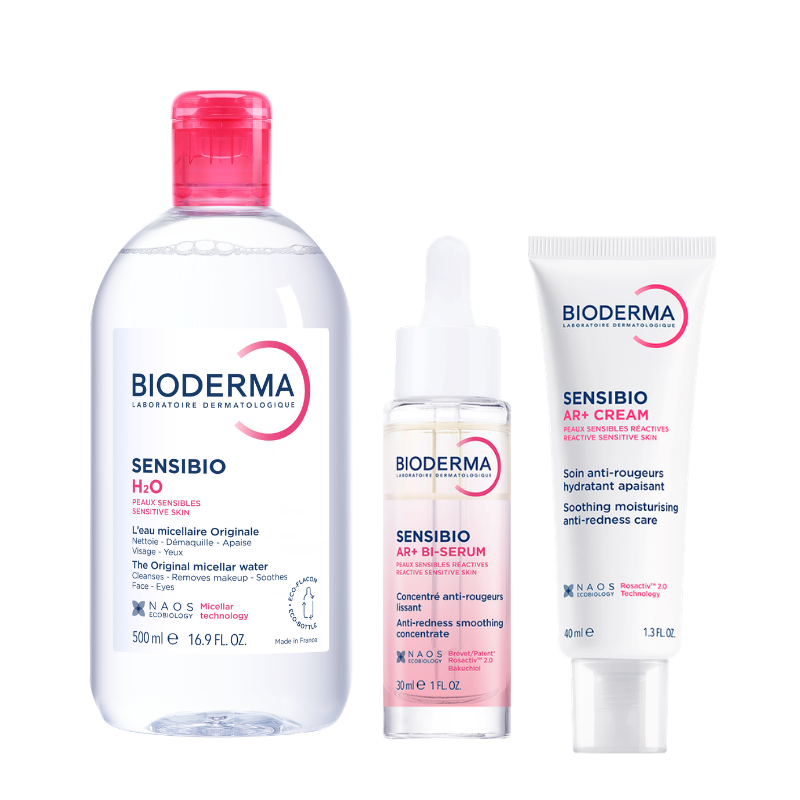
When skin appears reactive and shows visible signs of reduced elasticity, conventional anti-aging skincare products may feel uncomfortable on the skin. The choice between tolerance and efficacy is no longer necessary. The appearance of redness & signs of aging routine was designed for this dual challenge.
This three-step routine combines:
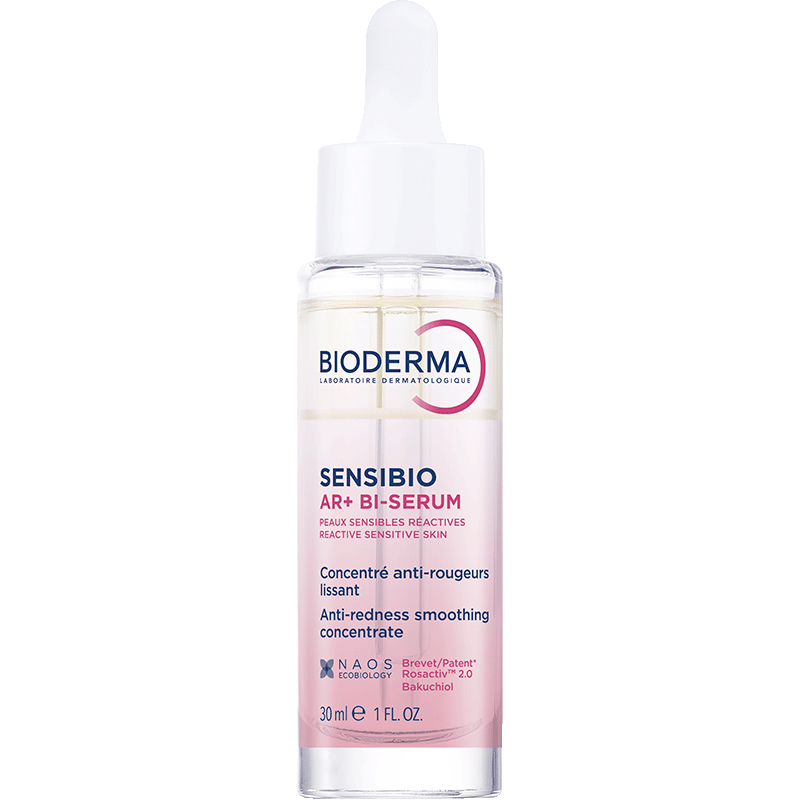
- Sensibio AR+ Bi-serum, to visibly reduce redness while supporting firmness
- Sensibio AR+ Cream, for hydration and helping barrier reinforcement
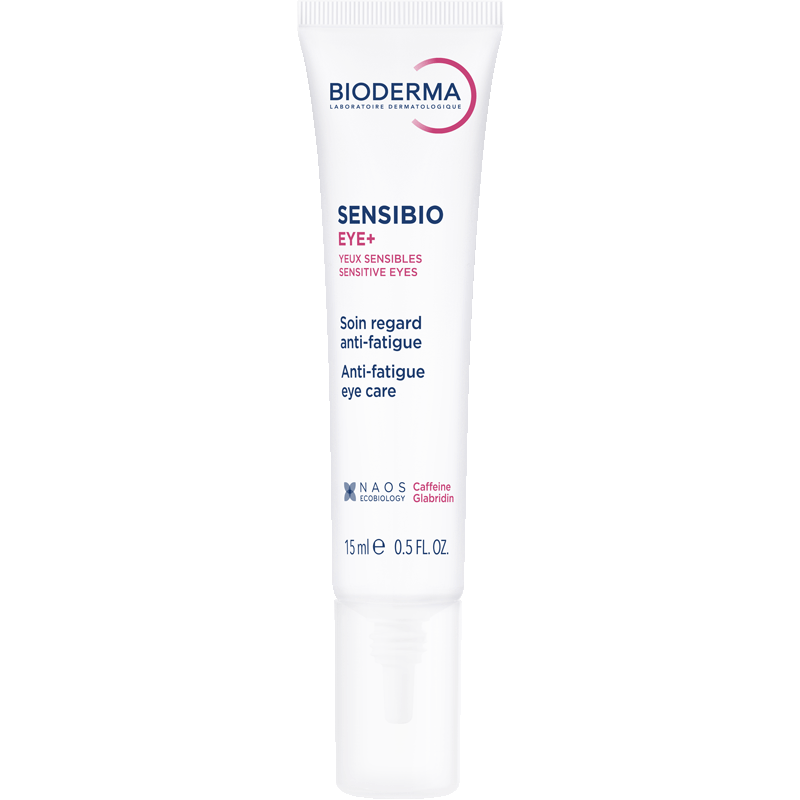
- Sensibio Eye+, for the delicate eye area
Each formula follows an ecobiological approach designed to work in harmony with the skin rather than overwhelming it. Clinical studies showed a 76% reduction in the appearance of redness after 28 days, with immediate comfort felt within 30 seconds of application. The routine is particularly suited to the late 30s through peri-menopause stages, when sensitive skin may feel more fragile and visible signs of aging become more noticeable.
Common questions about skin elasticity
Elasticity can be preserved and improved through consistent skincare, daily sun protection, hydration and a nutrient-rich diet. Significant restoration of lost collagen requires medical interventions such as retinoids or in-office care.
Some studies suggest oral collagen peptides may modestly improve hydration and elasticity over several months. Topical retinoids and vitamin C remain more reliably effective for collagen stimulation.
Gently pinch the skin on the back of the hand for a few seconds, then release it. Healthy elastic skin returns to normal in under 2 seconds. A delayed recovery indicates reduced elasticity.
Scientific references
- Age-related changes in dermal collagen physical properties in human skin (PLOS One, He et al., 2023) https://pmc.ncbi.nlm.nih.gov/articles/PMC10707495/
- The Skin and Inflamm-Aging (Biology, Agrawal et al., 2023) https://pmc.ncbi.nlm.nih.gov/articles/PMC10669244/
- The Prevalence of Sensitive Skin (Frontiers in Medicine, Farage, 2019) https://pmc.ncbi.nlm.nih.gov/articles/PMC6533878/
- Estrogens and aging skin (Dermato-Endocrinology, Thornton, 2013) https://pmc.ncbi.nlm.nih.gov/articles/PMC3772914/
- Managing Menopausal Skin Changes: A Narrative Review of Skin Quality Changes, Their Aesthetic Impact, and the Actual Role of Hormone Replacement Therapy in Improvement (Journal of Cosmetic Dermatology / Wiley, Viscomi et al., 2025) https://pmc.ncbi.nlm.nih.gov/articles/PMC12374573/
Author
Content written by the BIODERMA USA editorial team and medically reviewed by Anaïs Caldirola, Medical lead at NAOS, ensuring accuracy and scientific reliability. Medical information is based on established dermatological and nutritional references.