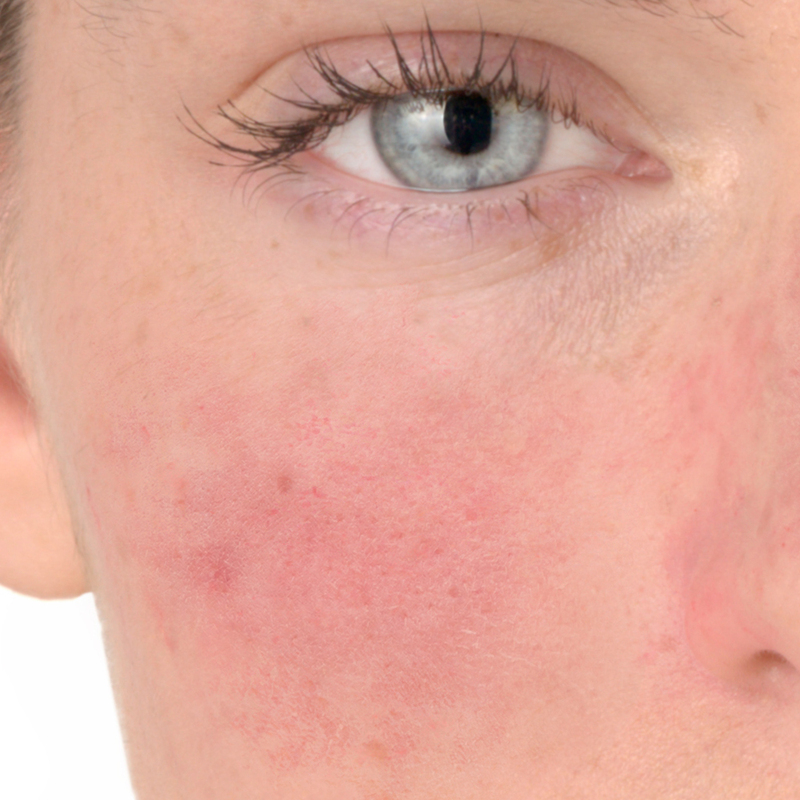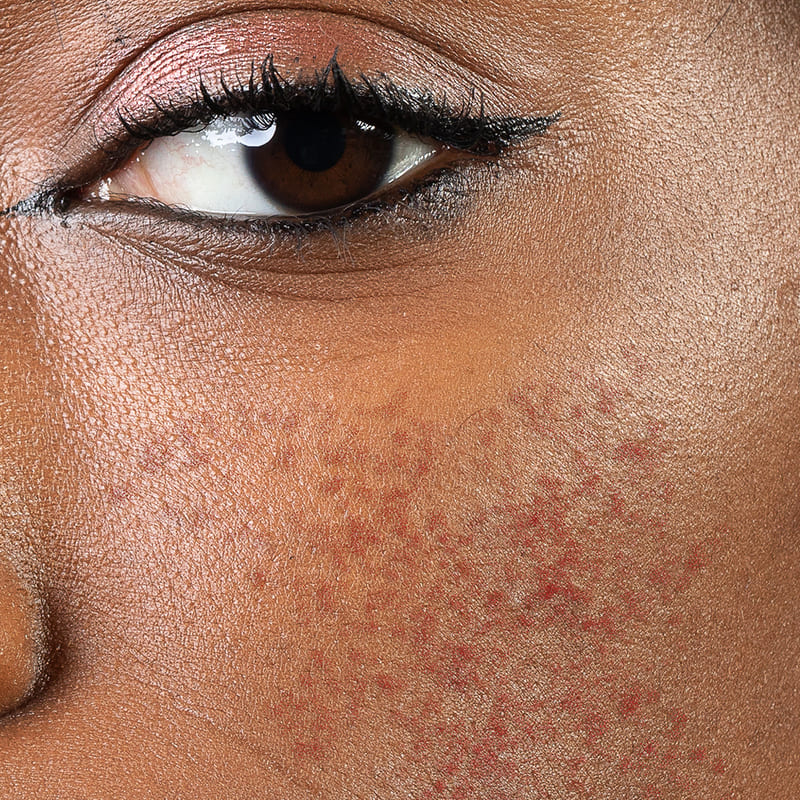


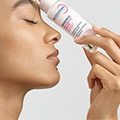

Dynamic wrinkles, also called expression lines, are the small folds that appear on the face during smiling, frowning or squinting. Unlike static wrinkles, they only show up during muscle movement, at first. With time, they tend to become permanent. This article explains why they form, why they appear sooner on sensitive skin, and what really helps to prevent them.
Dynamic wrinkles: causes, support and care for expression lines
Reading time : 8 min
Key takeaways from this guide
- Movement creates them. Each smile or frown leaves a tiny mark that adds up over time.
- They become permanent. When the skin loses its bounce, lines stay even at rest.
- Sun is the main accelerator. Roughly 80% of visible aging comes from UV exposure.
- Sensitive skin reacts first. A weaker barrier and chronic inflammation speed up the process.
- Daily habits matter. SPF, sleep position and gentle care visibly slow progression.
- Targeted treatments exist. Topical care first, professional procedures when needed.
What are dynamic wrinkles?
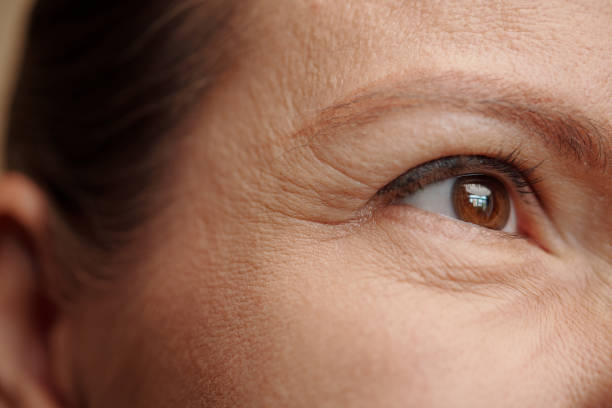
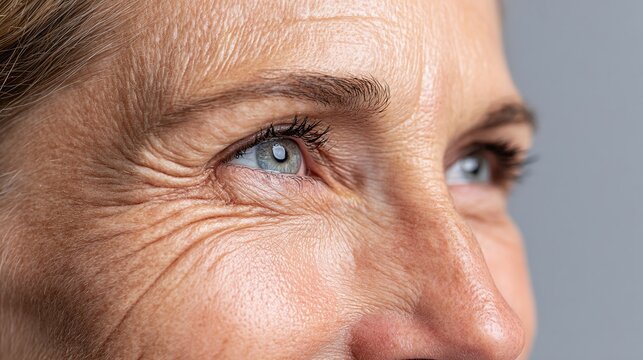
Dynamic wrinkles form when repeated facial movements, smiling, frowning, squinting, fold the skin along the same lines, day after day. In their early stages, they appear only during the movement and disappear at rest. The skin is still elastic enough to bounce back. Over time, this ability fades and the folds remain visible even on a relaxed face.
Three areas concentrate most expression lines, because they combine high muscle activity and very thin skin:
- Crow's feet around the outer eye corners. The skin is only 0.5 mm thick here. Lines often appear first.
- Frown lines between the eyebrows. They form when concentrating, squinting or expressing concern.
- Forehead lines. Horizontal creases caused by raising the eyebrows.
How do dynamic wrinkles become permanent?
As long as the skin produces enough collagen and elastin, it returns to its smooth state after each movement. With time, the cells that produce these structural fibers slow down their activity. Aged collagen also becomes fragmented and disorganized, with altered mechanical properties at the fiber level 1.
At the same time, existing fibers stiffen and break under the weight of repeated muscle contractions. Year after year, the skin develops a kind of "memory" of its most frequent folds.
When collagen breakdown outpaces production, usually somewhere in the mid-thirties, the skin can no longer fully recover. Lines that disappeared in seconds first take minutes to fade, then hours, then stay. This is the moment when dynamic wrinkles become static.
The skin also gets thinner and less hydrated, which reduces its natural cushioning. The folds become structural, no longer just functional.
Three signals indicate that a dynamic wrinkle is becoming a static line:
- Slower recovery. The line takes longer to fade after the muscle relaxes, first a few seconds, then several minutes.
- A faint crease at rest. The skin around the line looks slightly marked even when the face is fully relaxed.
- The same exact spot. The fold reappears in identical position every time the expression occurs.
Catching these signals early opens the widest window for prevention, before the line is fully etched into the dermis.
What accelerates dynamic wrinkles?
Beyond natural aging, several environmental factors push expression lines toward permanence faster. Three are particularly well-documented.
UV rays directly damage collagen and elastin in the dermis. A landmark study on Caucasian skin showed that UV exposure seems to be responsible for about 80% of visible facial aging signs2. Even small daily exposures, commute, lunch outside, sun through a window, add up.
Tobacco smoke reduces oxygen and nutrients reaching the skin, and damages the elastic fibers that give skin its bounce. Research shows chronic smoking significantly increases the stiffness of both the dermis and the epidermis³. These changes may in part underlie the wrinkling and loss of elasticity associated with smoking.
Air pollution particles slip into the skin, where they trigger low-level inflammation. Over time, this inflammation breaks down collagen faster than the skin can rebuild it. People living in highly polluted areas show measurably faster wrinkle formation than those in cleaner environments.
Why do dynamic wrinkles show up earlier on sensitive skin?
Sensitive skin tends to develop expression lines sooner than resilient skin. Three connected factors explain it.
Sensitive skin starts with a compromised skin barrier. Aging is associated with significant changes to skin structure and function, which directly affect how well the skin can defend itself ⁴. Water leaves the skin faster, the dermis stays drier, and dry skin loses elasticity sooner. The collagen fibers cannot return to their original shape after each fold.
Reactive skin goes through frequent inflammatory episodes, triggered by products, stress, weather. Each episode pulls the skin's cellular resources toward damage control instead of collagen production. Inflammatory molecules also break down the building blocks of the dermis, which leads to wrinkles and sagging skin5.
Many sensitive skin types also have a naturally thinner epidermis. With less natural cushioning, the mechanical stress of facial movements reaches the dermis directly. This explains why early signs appear sooner on this skin type.
How can daily habits slow dynamic wrinkles?
A few consistent habits make a measurable difference over months and years. None is miraculous on its own. Together, they protect the skin's structural reserves.
A broad-spectrum SPF 30 or higher, every morning, regardless of the weather. This is the single habit with the highest impact on dynamic wrinkle prevention. Sunscreen blocks the UV rays that destroy the very fibers responsible for skin elasticity. Reapply every two hours during direct sun exposure.
A well-hydrated dermis recovers better after muscle contraction. Aim for around 2 to 3 liters of water per day. Hydrated skin tolerates repeated facial movements without leaving permanent marks.
Squinting at a bright screen, frowning while concentrating, scrunching the eyes against the sun: these unconscious habits add up. Two simple corrections can help:
- Adjust screen brightness and use reading glasses if needed.
- Wear sunglasses outdoors, to avoid involuntary squinting.
Sleeping face-down or on the side compresses the skin against the pillow for hours, creating extra creases. Sleeping on the back avoids this mechanical pressure and lets the skin rest fully.
Which skincare routine helps fight dynamic wrinkles on sensitive skin?
Reactive skin needs a measured approach. Aggressive care often backfire, triggering inflammation that itself accelerates aging. The key principle: support the barrier first, add ingredients second.
Before introducing any anti-aging ingredient, the skin needs a stable foundation. A micellar water gently removes impurities, makeup and pollution without rubbing or rinsing. The micelles trap dirt by simple contact. This is particularly suited to the delicate eye area, where crow's feet form.
On top of cleansing, three pillars:
- Hydration with humectants and lipid-rich ingredients.
- Soothing ingredients such as niacinamide.
- Daily SPF, non-negotiable.
Once the skin stays calm for a few weeks, introduce one anti-aging at a time, at low concentration. The most documented:
- Retinoids (or bakuchiol on sensitive skin) stimulate collagen production. Start once a week.
- Vitamin C to protect existing collagen and support new synthesis.
- Peptides to support the skin's structural fibers.
Morning: gentle cleansing, antioxidant serum, light moisturizer, broad-spectrum SPF.
Evening: thorough makeup and SPF removal, hydrating toner, targeted care (retinoid 2-3x weekly), barrier-repairing cream.
When should you consider professional approach?
Topical skincare works well in the early stages. When expression lines stay visible at rest for several minutes after movement, the structural changes start to go beyond what creams alone can reverse. Professional approach then become an option.
These injections temporarily relax the muscles that create the folds, forehead, between the eyebrows, around the eyes. By pausing the repetitive movement, they let existing collagen rest and prevent further deepening. Effects last 3 to 4 months.
On sensitive skin, it is essential to discuss possible reactions with a board-certified dermatologist before any session.
Radiofrequency and microneedling stimulate collagen production through controlled micro-injury. They suit people who want to improve skin quality without altering muscle activity. Sensitive skin generally needs adapted protocols, with longer recovery time between sessions to avoid post-treatment inflammation.
No care fully reverses aging. Even medical procedures work better when combined with consistent daily skincare. A dermatologist helps build a plan that respects the skin's limits and matches each person's goals.
Targeted care for sensitive skin and dynamic wrinkles
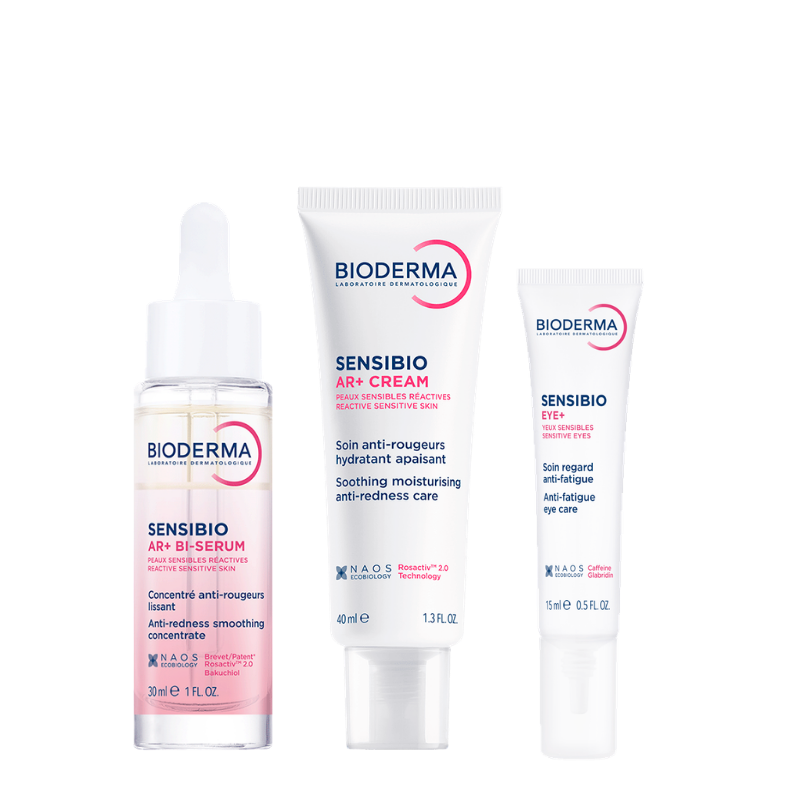
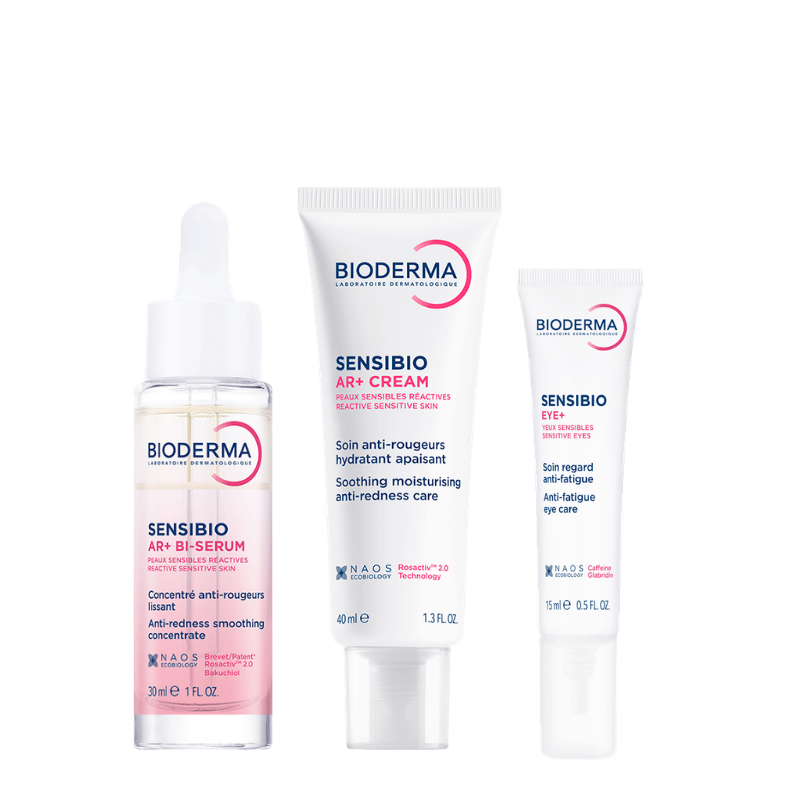
Reactive skin showing early expression lines benefits from a routine that helps support the skin barrier and improves the appearance of skin firmness, without causing discomfort. Products designed for sensitive skin can help address both needs.
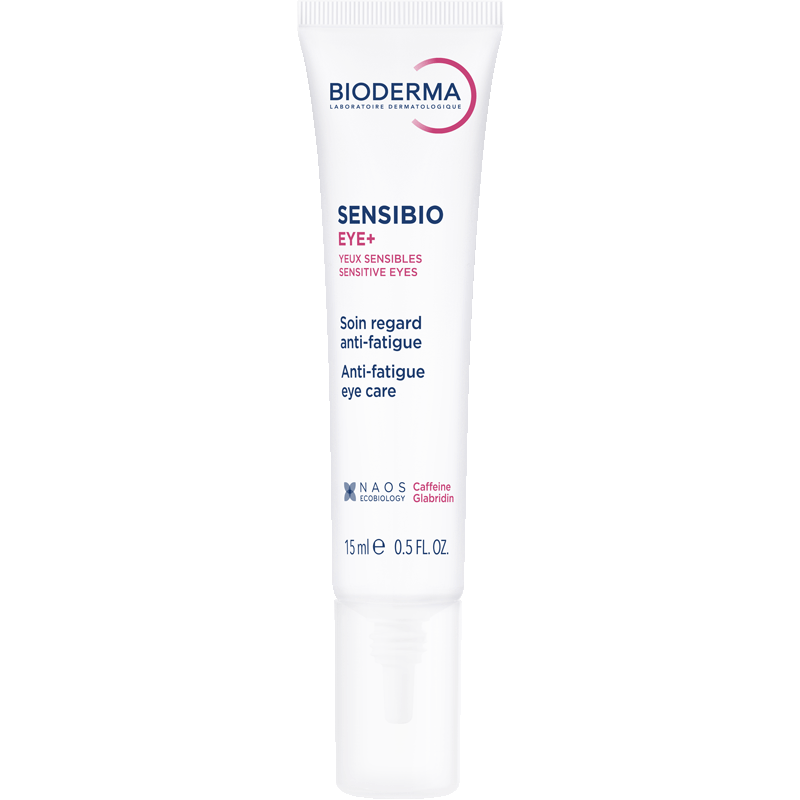
This is where dynamic wrinkles often appear first. The Sensibio eye + formula targets this delicate zone, strengthens the moisture barrier, and helps reduce the appearance of dark circles and puffiness, concerns that frequently come along with the first expression lines on sensitive skin.
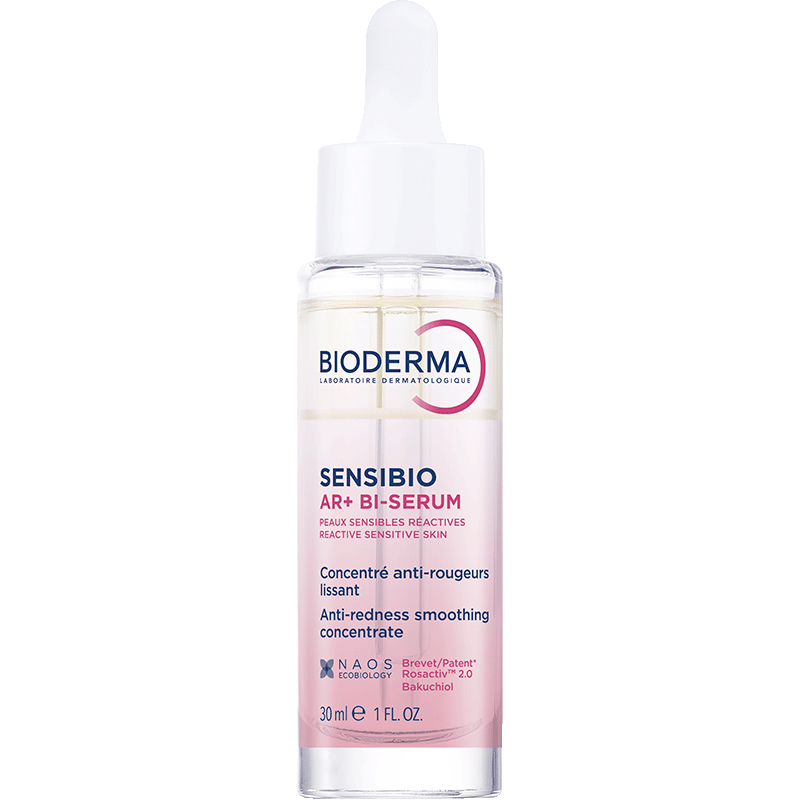
For skin showing visible redness and early expression lines, an anti-redness serum for sensitive skin helps soothe discomfort while delivering hydrating and smoothing active ingredients. Biomimetic ingredients are designed to work in harmony with the skin to help improve the appearance of skin texture and tone. This dual approach helps support a more even and comfortable-looking complexion over time.
Common questions about dynamic wrinkles
Dynamic wrinkles only appear when the facial muscles contract, when smiling, frowning or squinting. They disappear at rest. Static wrinkles, on the other hand, stay visible even on a fully relaxed face. With time, repeated dynamic wrinkles slowly turn into static ones, as the skin loses its capacity to fully recover its smoothness.
Several factors can explain it: thin skin, frequent sun exposure, smoking, chronic dehydration, very expressive face, lots of squinting in front of screens. Collagen production also begins to decline around age 25. Good news: at this stage, expression lines are still fully reversible with daily SPF, hydration and a gentle skincare routine.
Start with a barrier-supportive routine: gentle cleansing, antioxidants, daily SPF, and a low-dose retinoid or bakuchiol introduced gradually. If topical care is not enough, a dermatologist can recommend cares adapted to reactive skin, neuromodulator injections at adjusted doses, or modified microneedling protocols with longer recovery time.
Scientific references
- Age-related changes in dermal collagen physical properties in human skin (PLOS One – He et al., 2023) https://pmc.ncbi.nlm.nih.gov/articles/PMC10707495/
- Effect of the sun on visible clinical signs of aging in Caucasian skin (Clinical, Cosmetic and Investigational Dermatology – Flament et al., 2013) https://pmc.ncbi.nlm.nih.gov/articles/PMC3790843/
- The systemic influence of chronic smoking on skin structure and mechanical function (Journal of Pathology / Wiley – Langton et al., 2020) https://pathsocjournals.onlinelibrary.wiley.com/doi/10.1002/path.5476
- Clinical consequences of age-related skin barrier dysfunction—Part I: Structural, molecular, and physiologic changes with cutaneous aging (Journal of the American Academy of Dermatology – Wahhab et al., 2024) https://www.jaad.org/article/S0190-9622(24)02752-X/abstract
- Influences on Skin and Intrinsic Aging: Biological, Environmental, and Therapeutic Insights (Journal of Cosmetic Dermatology / Wiley – Hussein et al., 2025) https://onlinelibrary.wiley.com/doi/10.1111/jocd.16688
Author
Content written by the BIODERMA USA editorial team and medically reviewed by Anaïs Caldirola, Medical lead at NAOS, ensuring accuracy and scientific reliability. Medical information is based on established dermatological and nutritional references.