




Key takeaways from this guide
- Neck eczema is common in atopic dermatitis and in contact eczema, and the first step is finding the trigger.
- Several distinct triggers exist, from allergic contact reactions to fragrances, nickel or cosmetics, to atopic flares, irritant exposure and friction from collars or jewelry, and each one calls for a different focus.
- A daily routine with fragrance-free moisturizers reduces flare frequency, while prescription treatments handle the more intense cases.
- Visible neck lesions affect quality of life, and psychological support pairs well with dermatological care.
- A consultation is warranted if symptoms last over two weeks, if signs of infection appear, or if itching affects sleep.
Neck eczema is uncomfortable and visible. The skin there is thin and in contact with clothing collars, jewelry and cosmetic residues throughout the day.
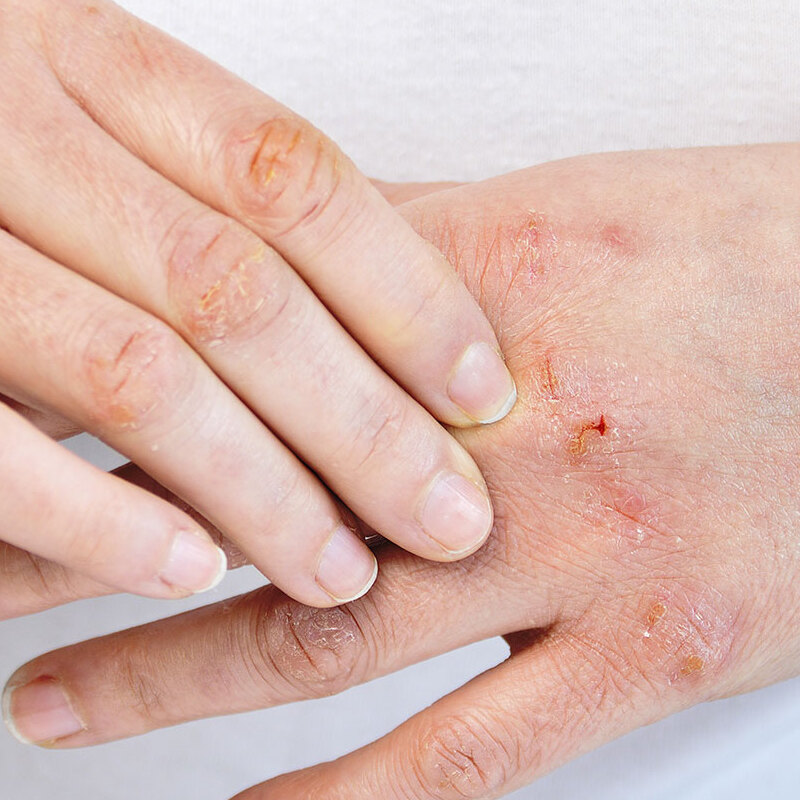
This guide addresses redness, itching and dryness on the neck. It explains how to identify the triggers, recognize the symptoms, and choose care strategies that work for sensitive skin.
The information below is based on peer-reviewed dermatology and on what suits sensitive, atopic-prone skin.
Introduction to eczema on the neck