


BLACK FRIDAY IS ON! UP TO 25% OFF + FREE 7-PIECE GIFT WITH $75+

SHOP NOW

Subscribe to our newsletter

Get 10% off your first order, plus the latest updates and news!

Normal, dry to atopic skin

Breast eczema explained: causes, symptoms, and solutions

Reading time : 9 min

woman looking toward us

Key takeaways from this guide

  • Breast eczema is an inflammatory condition affecting the chest, breast skin or the nipple-areolar complex. It is common in patients with a history of atopic dermatitis.

  • Triggers fall into a few categories. Atopic predisposition for some patients. Irritation from friction or tight clothing for others. Contact allergens. Hormonal changes during pregnancy or breastfeeding.

  • Nipple eczema warrants particular caution. Persistent or unilateral lesions can be confused with Paget's disease of the breast. A dermatology consultation is the safe choice.

  • Daily moisturizing with fragrance-free emollients is the basis of management. Prescription topical corticosteroids handle more intense flares.

  • Loose clothing, gentle detergents and fragrance-free products on the chest reduce flare frequency.


Breast eczema is uncomfortable. It is often visible. Everyday clothing can intensify the symptoms. The skin on the chest is delicate. It is also in contact with bras, laundry detergent residue, sweat and friction throughout the day.
 

This guide explains what causes breast eczema, how to recognize its different presentations, and what care strategies work. Nipple eczema receives particular attention because of its potential confusion with more serious conditions.
 

All information below is based on peer-reviewed dermatology and focused on what fits sensitive, atopic-prone skin.
 

woman turning her face

Introduction to breast eczema


Why the breast area is vulnerable


Breast skin is thin in some areas. The nipple-areolar complex is the most delicate zone.
 

Sweat collects under the breasts and in the cleavage. Bras and tight clothing create constant friction. Laundry detergent residues on bras and tops can transfer to the skin during long wearing hours. The combination creates an environment in which eczema flares develop easily on a barrier that may already be compromised.

Breast eczema versus other skin conditions


Several conditions can resemble breast eczema. Telling them apart matters for treatment.

  • Breast eczema: dry, itchy, sometimes weeping patches on the chest or nipple area. Chronic scratching can thicken the skin.

  • Contact dermatitis: triggered by specific allergens or irritants. Often follows a recognizable timeline after exposure.

  • Intertrigo: inflammation in skin folds (under the breast) from heat and moisture, sometimes with fungal overgrowth.

  • Paget's disease of the breast: a rare cancer that can mimic nipple eczema. Usually unilateral, persistent and unresponsive to standard treatment.

A dermatologist confirms the diagnosis when there is any doubt.


Common causes of breast eczema


Most chronic breast eczema is a manifestation of atopic dermatitis. The skin barrier is naturally weaker. The immune system reacts more strongly to triggers that other people tolerate fine.
 

Nipple eczema is one less-common presentation of atopic dermatitis. In a prospective study of 100 women presenting with nipple eczema during pregnancy, 39 were diagnosed with atopic dermatitis after detailed clinical and immunological evaluation1. For broader context on the condition itself, see eczema.
 

Mechanical irritation is a major driver of breast eczema. Underwires rub. Synthetic fabrics trap heat. Sports bras worn during long workouts combine sweat and friction.
 

Switching to soft cotton helps. So do looser fits during flare phases. Changing out of sweaty sportswear promptly also reduces mechanical aggression on the area. The simple changes matter as much as the products applied.
 

Allergic contact dermatitis on the breast is well documented. Common culprits include nickel in bra clasps and underwires. Fragrances in laundry detergents are another. So are preservatives in body lotions or shower products. A wide variety of substances can cause eczema-like changes in the breast area. Proper identification often requires patch testing2.
 

Hormonal fluctuations during pregnancy, menstrual cycles or menopause can affect skin barrier function. Some women develop breast or nipple eczema for the first time during these periods.


Breastfeeding adds its own constraints. Repeated moisture from milk is one factor. Friction from latching is another. Increased nipple sensitivity completes the picture. Together these create conditions that favor flares. Nipple eczema in this context is well documented in the medical literature3, and treatment must take into account the safety of products applied to a breastfeeding nipple. Lanolin and other emollients approved for nursing are the first-line options.
 

Stress is a recognized eczema trigger across body sites. The cortisol released under chronic stress affects skin barrier function. People with atopic predisposition often see their flares correlate with periods of disrupted sleep, high workload or emotional difficulties.
 

Recognizing symptoms of breast eczema


Breast eczema often starts subtly. The skin feels tight after showering. Small dry patches appear on the chest, under the breasts or around the nipple. The area reacts faster to a new bra or a different laundry product.
 

Acting at this point keeps the situation manageable. Switching to a fragrance-free emollient and removing the suspected trigger usually clears mild cases within a few weeks.
 

As the condition progresses, the skin reddens and itches. Redness can extend across the breast or remain confined to specific zones. Scratching intensifies the symptoms. Long-term scratching thickens the skin into what dermatologists call lichenification.
 

Blisters and oozing appear in more advanced cases. Crusting follows. At this stage, prescription treatment becomes necessary.
 

Nipple eczema deserves separate attention. The skin of the nipple-areolar complex is very thin. Symptoms include pruritus and erythema. Painful fissures or oozing also appear. Lichenification can develop with chronic scratching. In a systematic review of the literature on nipple eczema, atopic, irritant and allergic contact dermatitis subtypes have been described, each with specific clinical features4.
 

Most important: persistent unilateral nipple lesions that do not respond to standard eczema treatment require biopsy to rule out Paget's disease of the breast. It is a rare but serious differential diagnosis.
 

Eczema flares often follow a recognizable pattern. Increased itching. Redness extending beyond the usual zone. Sleep affected by nighttime itching. Visible fissures or weeping.
 

Keeping a symptom diary helps identify what triggers each flare. Patterns usually appear within two to three weeks of careful tracking.
 

Effective treatment options for breast eczema


Topical corticosteroids are the first-line prescription option. Low-to-medium potency formulas are used on breast skin, which is thinner than the skin on the body and reacts faster to active ingredients. Topical corticosteroids and calcineurin inhibitors are the main pharmacological treatments for eczema, and their relative efficacy has been reviewed in recent Cochrane network meta-analyses5. The same review found no increase in skin thinning with short-term use of any steroid potency, and skin thinning was reported in only 0.3% of patients during longer-term use over 6 to 60 months5.
 

Calcineurin inhibitors such as tacrolimus or pimecrolimus are alternatives for chronic or recurring cases. They allow longer-term care without the considerations linked to prolonged steroid use on thin skin areas.
 

Between flares, daily moisturizing matters more than any single treatment. The skin barrier needs reinforcement. Fragrance-free emollients applied twice a day reduce water loss and limit flare frequency. Consistent emollient use is a well-established intervention in atopic dermatitis management.
 

Lipid-rich formulas work better than light lotions on dry, atopic-prone skin. For breastfeeding women, choose products specifically marked as safe for nursing.
 

See a dermatologist if symptoms persist over two weeks despite gentle care. Other reasons to consult include redness that extends, intense itching that affects sleep, signs of infection like yellow crusts or pus, and any unilateral nipple lesion that does not improve.
 

Specialist evaluation distinguishes simple eczema from contact dermatitis. Fungal infections are another differential. Rarer conditions like Paget's disease also need to be ruled out. The right diagnosis leads to the right treatment.
 

Home remedies and prevention strategies


A simple routine produces better results than complex regimens: 

  • Short lukewarm showers
  • Mild fragrance-free cleansers on the chest
  • Patting dry rather than rubbing
  • Moisturizer applied within two minutes of bathing

Ingredients to look for include ceramides, glycerin and shea butter. These help rebuild the lipid matrix between skin cells. Products free from fragrance, essential oils and alcohol denat are best for the chest area.
 

Several simple adjustments limit flare frequency:

  • Wear soft cotton bras during flare phases
  • Choose laundry detergents marked for sensitive skin
  • Change out of sweaty workout clothes promptly
  • Opt for lukewarm rather than hot showers, which strip surface lipids.


For breastfeeding mothers, air-drying the nipples between feeds and using lanolin-based protection limits the moisture cycle that aggravates flares.
 

Eczema is a chronic condition. The goal is not cure but control. Most patients reach a stable state with consistent moisturizing. Identified triggers are best kept out of the routine. Prescription treatments are reserved for active flares.
 

Patch testing identifies specific contact allergens when reactions remain unexplained. Knowing exactly which triggers to remove is more effective than trial-and-error elimination over months.
 

Chronic eczema affects more than the skin. Sleep disruption from nighttime itching, social discomfort over visible lesions and the daily management burden all weigh on emotional well-being.
 

Stress management techniques help interrupt the itch-scratch cycle. Regular moderate exercise, breathing techniques and consistent sleep schedules contribute to better eczema control alongside dermatological care. Psychological support is a useful complement when the condition affects quality of life.
 

Choosing the right ATODERM care for atopic-prone breast skin


Managing breast eczema is as much about what goes on the skin every day as it is about treating flares. Because the chest and nipple area is thin and easily irritated, the emollient routine matters: fragrance-free formulas built for very dry and atopic-prone skin help rebuild the barrier between flares and reduce how often the skin reaches the cracked or weeping stage.


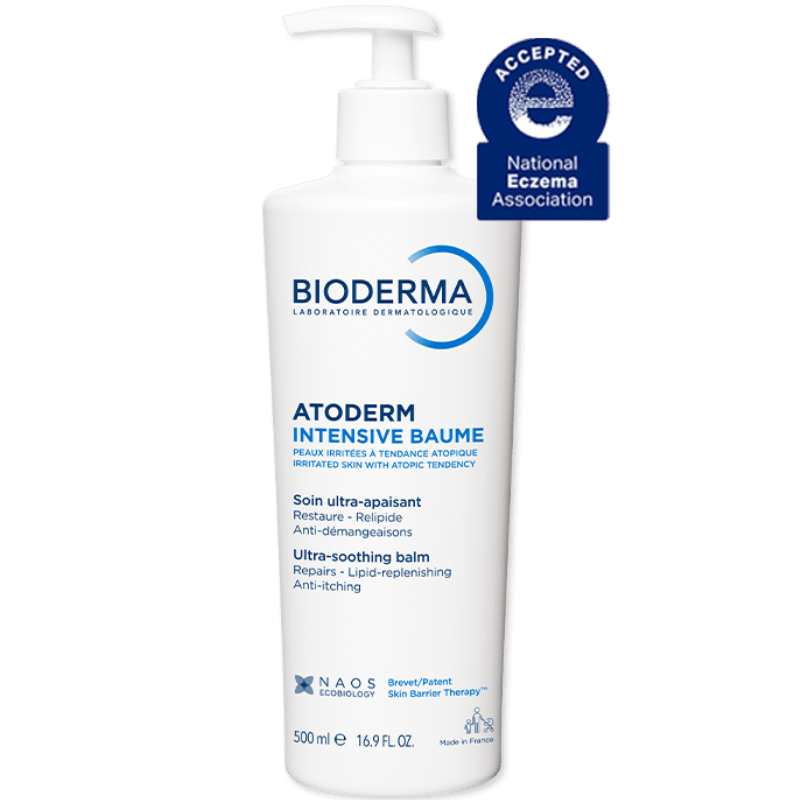
Within the ATODERM range, Atoderm Intensive Balm is formulated for very dry to atopic skin and carries the National Eczema Association Seal of Acceptance; in a study of 130 children with moderate atopic dermatitis applying it twice daily, 76% had no flare-ups over six months. For everyday maintenance on normal to dry skin once a flare has settled, Atoderm Ultra Cream helps providing lighter daily hydration, with skin hydration measured at +28% after 24 hours. Both are fragrance-free, the key criterion for the delicate skin of the breast area.
 

Common questions about breast eczema


Stress does not cause eczema directly, but it triggers flares in people with the predisposition. The cortisol released during chronic stress affects skin barrier function and amplifies inflammatory responses. People with atopic dermatitis often see their flares correlate with stressful periods.
 

Stress management techniques work as a complement to dermatological treatment, not as a replacement.
 

Breast eczema is more common than often thought. It is more frequent in women with a personal or family history of atopic dermatitis. The breast area is also a common site for allergic and irritant contact dermatitis due to clothing and cosmetics exposure.
 

Atopic dermatitis, the main driver of chronic breast eczema, affects an estimated 7.3% of US adults, or around 16.5 million people, of whom about 6.6 million have moderate-to-severe disease6. Precise prevalence figures specific to the breast remain limited, because many cases are managed without medical consultation.
 

Duration varies. Acute flares triggered by an identified irritant often resolve within one to two weeks once the trigger is removed and proper care is applied. Chronic atopic eczema follows an alternating pattern of flares and remissions, sometimes over years.
 

Consistent skincare, emollient use and trigger avoidance produce long-term improvement in most patients.
 

Scientific references

  1. Puri A, Sethi A, Puri KJPS, Sharma A. Correlation of nipple eczema in pregnancy with atopic dermatitis in Northern India: a study of 100 cases. An Bras Dermatol. 2019;94(5):549-552. https://pubmed.ncbi.nlm.nih.gov/31777354/
  2. Salim A, Mehregan D, Mehregan D. 'Eczematous' dermatitis of the nipple: clinical and histopathological differential diagnosis of Paget disease. Pathology. 2024;56(3):310-322. https://pubmed.ncbi.nlm.nih.gov/38307774/
  3. Mizuashi M, Iwabuchi E, Aiba S. Nipple dermatitis in lactating women: clinical features and management. Allergol Int. 2014. https://pubmed.ncbi.nlm.nih.gov/23659338/
  4. Wohlrab J, Lück-Knobloch D, Werfel T. Nipple eczema: A systematic review and practical recommendations. J Dtsch Dermatol Ges. 2023;21(2):131-139. https://pubmed.ncbi.nlm.nih.gov/36695082/
  5. Lax SJ, Van Vogt E, Candy B, et al. Topical anti-inflammatory treatments for eczema: network meta-analysis. Cochrane Database Syst Rev. 2024;8(8):CD015064. https://pubmed.ncbi.nlm.nih.gov/39105474/
  6. Chiesa Fuxench ZC, Block JK, Boguniewicz M, et al. Atopic Dermatitis in America Study: a cross-sectional study examining the prevalence and disease burden of atopic dermatitis in the US adult population. J Invest Dermatol. 2019;139(3):583-590. https://pubmed.ncbi.nlm.nih.gov/30389491/


Author

Content written by the BIODERMA USA editorial team and medically reviewed by Anaïs Caldirola, Medical lead at NAOS, ensuring accuracy and scientific reliability. Medical information is based on established dermatological knowledge and peer-reviewed sources.