BLACK FRIDAY IS ON! UP TO 25% OFF + FREE 7-PIECE GIFT WITH $75+

SHOP NOW

Subscribe to our newsletter

Get 10% off your first order, plus the latest updates and news!

Normal, dry to atopic skin

Dry skin on face: causes, solutions and prevention strategies

Reading time : 9 min

sensitive skin woman face

Key takeaways from this guide


  • Facial dryness is more visible and more reactive than dryness on the body, because the skin is thinner, exposed all day, and in constant contact with cosmetics, water and the environment.
  • Common causes include weather and harsh cleansers, an age-related decline in sebum production, and skin conditions such as eczema, seborrheic dermatitis or rosacea.
  • A mild cleanser at the right pH and a fragrance-free moisturizer applied on damp skin build a working routine.
  • Persistent flaking, redness or itching despite steady care points to an underlying condition that needs medical evaluation.
  • Sun protection is part of the routine rather than an extra, and daily SPF supports the skin barrier and limits how much dryness progresses over time.


Dry skin on the face can feel like a minor concern at first. It shows up as tightness after washing, patches that flake under foundation, or burning when applying a new product. Facial skin is thinner than on the body, has more sebaceous glands and more exposure, and reacts faster to weather, cosmetics and lifestyle changes.
 

This guide walks through what causes facial dryness, how to build a routine that works, and the signs that something deeper is going on. It covers daily habits and product choices, and outlines when to consult a dermatologist.
 

The information below is based on peer-reviewed dermatological evidence. Product recommendations focus on what suits sensitive, dry, atopic-prone facial skin.


Understanding dry skin on the face


Facial skin has its own constraints. It is thinner than the body, especially around the eyes and lips, and has more sebaceous glands but also more environmental exposure. UV rays, pollution, central heating, makeup and frequent cleansing all hit the face first, so the skin reacts faster than elsewhere, though it also recovers faster when the routine is right. For broader context on the condition itself, see dry skin.
 

Facial dryness can mean several things at once. The forehead and cheeks tighten after washing, small flakes appear around the nose and the corners of the mouth, and the skin around the eyes feels rough and looks duller, since this area has the thinnest skin on the face. Foundation no longer applies smoothly, and the skin reacts to products that used to work fine. These signs do not appear at the same time, and the location matters as much as the symptom itself.
 

Causes of dry skin on the face


Cold dry air is one main external trigger, alongside indoor heating, wind and UV exposure. A comprehensive review of the literature shows that low humidity and low temperatures affect skin barrier function and increase vulnerability to mechanical stress1. Winter combines all four, and even in summer, air conditioning, swimming pool water and prolonged sun exposure can dry out facial skin. Air travel is also notorious, since cabin air is very dry and irritates sensitive skin within hours.
 

Sebum production declines with age. Aging sebaceous glands undergo atrophy, sebum secretion decreases, and sebum composition changes, all linked to dryness, roughness and pruritus on the face2. A cross-sectional study of 756 elderly patients in primary care found xerosis in 55.6% of the population, with a history of atopic dermatitis showing the strongest association3. Women see a sharper drop after menopause as estrogen levels fall, while men experience the decline more gradually. The face is one of the first areas to show the impact, since sebaceous glands are concentrated there.
 

Many cases of facial dryness come from the routine itself. Bar soaps with a high pH affect the skin's natural acid mantle, since conventional soaps are alkaline (pH 9-11), whereas syndets formulated at acidic to neutral pH are designed to be more compatible with skin4. Hot water in the shower or sink strips lipids, exfoliation that is too frequent with grainy scrubs or strong acids weakens the barrier, and removing makeup with cleansing wipes leaves residues that further dry the skin. Dry skin around the mouth is a common consequence of this habit, since the area is repeatedly cleansed without rinsing.
 

Some facial dryness is more than dryness. Atopic dermatitis, seborrheic dermatitis and contact dermatitis can all present with dry patches on the face, and rosacea and psoriasis complete the differential. Additional signs include redness, scaling or itching, and when standard moisturizing does not help, an underlying condition is likely. A dermatologist examination clarifies whether the issue is cosmetic or medical.
 

Effective treatments for facial dryness


Cleansing should protect what is already there. A syndet cleanser at a skin-friendly pH is preferable to bar soap, used with lukewarm rather than hot water, once or twice a day at most, with the skin patted dry using a soft towel rather than rubbed. The two minutes after cleansing are when the skin is most receptive to moisturizer, and applying it on slightly damp skin locks in the water before it evaporates.
 

A good facial moisturizer combines three types of ingredients. Humectants such as glycerin, hyaluronic acid and urea pull water to the skin surface, emollients such as squalane and fatty alcohols smooth and soften, and occlusives such as petrolatum, dimethicone and plant butters form a film that slows evaporation. A qualitative review of randomized trials confirms that ceramide-containing formulations raise stratum corneum lipid content and have a measurable moisturizing effect in atopic and xerotic skin5. Fragrance-free formulas are the right choice for dry sensitive facial skin.
 

Daily broad-spectrum SPF 30 or higher belongs in every routine for dry facial skin. UV exposure affects the skin barrier, intensifies existing dryness, and accelerates the age-related decline that contributes to facial dryness. Mineral sunscreens with zinc oxide or titanium dioxide are kinder to reactive skin than chemical ones, and many moisturizers now combine hydration and SPF in one product, which simplifies the routine.


Building a daily routine for dry facial skin


In the morning, less is more. A mild cleanser if needed (rinsing with lukewarm water is enough for some people), a hydrating serum on damp skin for those who use one, a fragrance-free moisturizer suited to the skin, and sunscreen as the last step. The whole routine takes under five minutes once it becomes a habit.
 

In the evening, the goal is to remove the day's accumulation gently. A mild cleanser takes off sunscreen, makeup and pollution, and a richer moisturizer or balm suits this stage, since the skin has all night to absorb it. Active ingredients such as retinoids are best introduced slowly and paired with a barrier-restoring moisturizer, since dry skin tolerates actives less well, and adding them one at a time is safest.
 

Once or twice a week, a hydrating mask gives an extra boost. Formulas based on glycerin, hyaluronic acid or panthenol are preferable to clays, which are drying, or acids, which exfoliate. Gentle chemical exfoliation suits dry sensitive skin better than mechanical scrubs, and when exfoliation is needed, low concentrations of lactic or polyhydroxy acids (PHAs) work without weakening the barrier when used sparingly.
 

Common mistakes and how to prevent them


Washing the face three or four times a day with cleansers strips the skin barrier, as does daily exfoliation even with mild products, and the skin needs time to recover between treatments. The nose is the most common zone people over-exfoliate in an attempt to clear blackheads or shine, and Dry skin around the nose often results from this habit, since aggressive treatment of the area paradoxically increases dryness and reactive sebum production. Twice-daily cleansing and weekly exfoliation are enough for most people with dry facial skin
 

Retinoids, vitamin C, AHAs, BHAs and niacinamide each have their place, but combining them all in one routine overwhelms dry skin. Starting with one active and watching the skin's reaction for two to three weeks before adding another is the safer approach. Skin that flares up after a new product was not ready for it, and simplifying the routine addresses the issue in many cases.
 

People focus on the moisturizer and forget that the cleanser dictates everything else. A harsh cleanser undoes the work of even the best moisturizer, while a mild cleanser, used correctly, supports the rest of the routine. Reviewing the whole sequence, not the cream alone, is where most improvements come from.
 

When to see a dermatologist


Facial dryness that does not improve after three weeks of steady gentle care warrants a dermatology consultation. Other warning signs include redness that extends or persists, intense itching, visible scaling, raised patches, lingering burning, or dryness associated with other symptoms such as fatigue, weight changes or hair loss. These can point to atopic dermatitis or seborrheic dermatitis, while rosacea, psoriasis or a systemic condition are other possibilities.


A dermatologist examines the skin and asks about the routine, products used, recent changes, family history and other symptoms. Patch testing may be added if a contact reaction is suspected, and blood tests are sometimes useful when systemic causes such as thyroid disorders or deficiencies are possible. The goal is to identify what is behind the dryness rather than simply prescribe a stronger cream.
 

Prescription treatments depend on the diagnosis. Topical corticosteroids reduce inflammation in inflammatory conditions, topical calcineurin inhibitors (tacrolimus, pimecrolimus) are options on the face when steroids are less suitable, antifungals address seborrheic dermatitis, and specific routines and ingredients such as azelaic acid or brimonidine target rosacea. Treating the underlying cause works better than trying to compensate with more moisturizer.
 

Choosing the right ATODERM care for dry facial skin


Facial skin is thinner and more exposed than the body, so it needs a light but nourishing texture and a cleanser that does not strip its acid mantle. Fragrance-free formulas reduce the reactivity that makes dry facial skin flake and tighten.
 

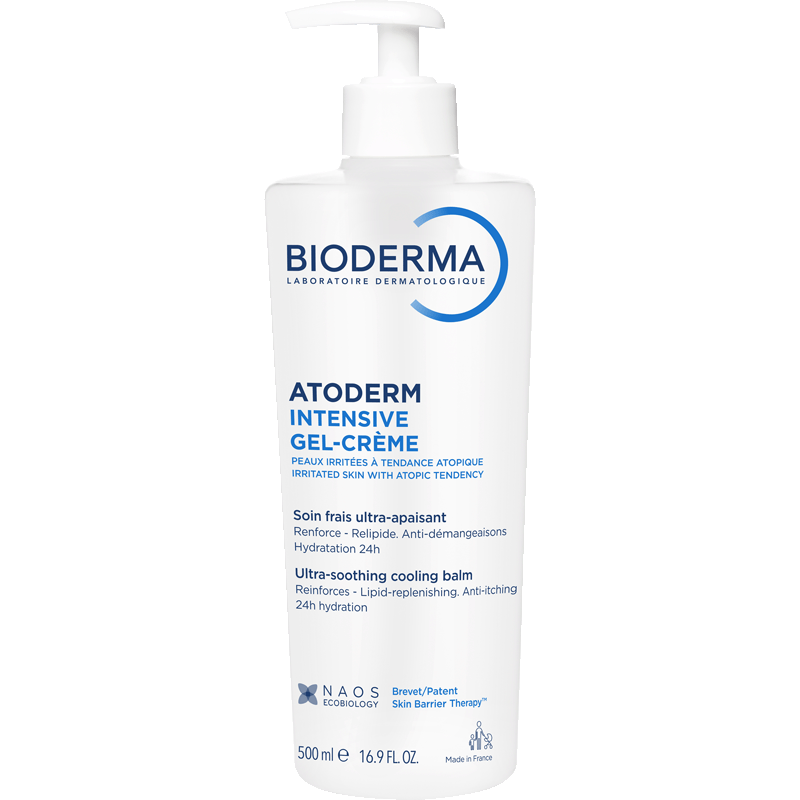
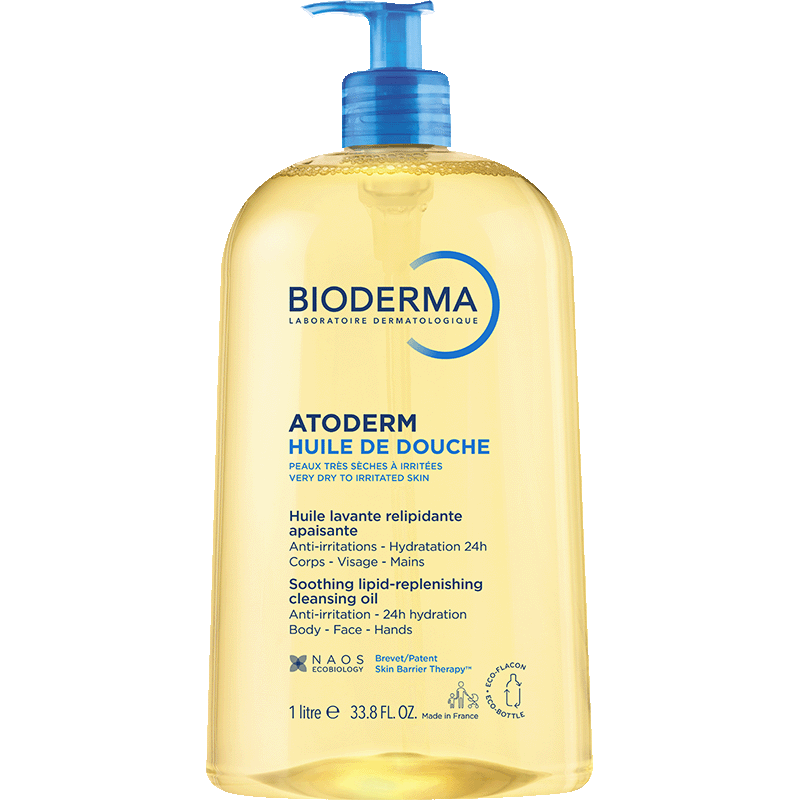
Within the ATODERM range, Atoderm Intensive Gel-Cream offers a light, fresh texture for very dry to atopic skin, with 100% of users reporting nourished skin and long-lasting skin protection measured at 95%. For gentle cleansing, Atoderm Shower Oil leaves the skin soothed and supports hydration. Both are fragrance-free.


Common questions about dry skin on the face


Why is my face so dry even when I moisturize?


Three reasons usually explain it. The moisturizer may not be adapted to the intensity, since light lotions are not enough for very dry skin. The timing may be off, as applying it on fully dry skin locks in less water than on slightly damp skin. The cleanser may also undo the work, since a harsh cleanser used twice a day strips more lipids than the cream can replace. Reviewing the whole routine, not just the moisturizer, usually addresses the issue.


Can dry skin on the face be a sign of something serious?


Most facial dryness improves with the right routine. Persistent or more intense dryness can sometimes signal a medical condition such as hypothyroidism, diabetes, atopic dermatitis, seborrheic dermatitis, rosacea or nutritional deficiencies. Dryness accompanied by intense itching, visible inflammation, weight changes, fatigue or other symptoms is a reason to consult a doctor.
 

How often should I exfoliate dry facial skin?


Once a week is enough for most people with dry skin, or twice if the skin tolerates it. Chemical exfoliation with low-concentration lactic acid or PHAs is preferable to mechanical scrubs, which weaken the barrier. Redness, tightness or flaking after exfoliation means the frequency is too high or the product is not the right one.


Scientific references

  1. Engebretsen KA, Johansen JD, Kezic S, Linneberg A, Thyssen JP. The effect of environmental humidity and temperature on skin barrier function and dermatitis. J Eur Acad Dermatol Venereol. 2016;30(2):223-249. https://pubmed.ncbi.nlm.nih.gov/26449379/
  2. Hou X, Wei Z, Zouboulis CC, Ju Q. Aging in the sebaceous gland. Front Cell Dev Biol. 2022;10:909694. https://pubmed.ncbi.nlm.nih.gov/36060807/
  3. Paul C, Maumus-Robert S, Mazereeuw-Hautier J, Guyen CN, Saudez X, Schmitt AM. Prevalence and risk factors for xerosis in the elderly: a cross-sectional epidemiological study in primary care. Dermatology. 2011;223(3):260-265. https://pubmed.ncbi.nlm.nih.gov/22104182/
  4. Hawkins S, Dasgupta BR, Ananthapadmanabhan KP. Role of pH in skin cleansing. Int J Cosmet Sci. 2021;43(4):474-483. https://pubmed.ncbi.nlm.nih.gov/34137035/
  5. Kono T, Miyachi Y, Kawashima M. Clinical significance of the water retention and barrier function-improving capabilities of ceramide-containing formulations: A qualitative review. J Dermatol. 2021;48(12):1807-1816. https://pubmed.ncbi.nlm.nih.gov/34510527/


Author

Content written by the BIODERMA USA editorial team and medically reviewed by Anaïs Caldirola, Medical lead at NAOS, ensuring accuracy and scientific reliability. Medical information is based on established dermatological knowledge and peer-reviewed sources.