


BLACK FRIDAY IS ON! UP TO 25% OFF + FREE 7-PIECE GIFT WITH $75+

SHOP NOW

Subscribe to our newsletter

Get 10% off your first order, plus the latest updates and news!

Normal, dry to atopic skin

Ringworm vs eczema: how to tell the difference and treat each condition

Updated on Reading time : 9 min

eczema on arm

Key takeaways from this guide


  • Ringworm is a fungal infection, whereas eczema is an inflammatory condition with no infection. They look alike at first, but the cause and the treatment have nothing in common.
  • Nummular eczema, with its coin-shaped plaques, is the form most often confused with ringworm, and a dermatologist uses dermoscopy and a KOH skin scraping to tell them apart.
  • Treating ringworm with a steroid cream slows recovery and lets the fungus progress, while treating eczema with an antifungal shows limited efficacy against the inflammation.
  • Diagnosis takes minutes in a dermatologist's office, whereas guessing from the look of the patch can add weeks before reaching the right care path.
  • Ringworm spreads through skin contact and shared items, while eczema does not spread and instead runs in families.


A round, itchy, red patch on the skin is hard to identify at first sight. Ringworm and eczema look alike at first glance, even more so when eczema takes its nummular form. The cause and the treatment differ, and mismatching them can mean weeks before reaching the right care path.

This guide walks through what each condition is, how to spot the visual and clinical differences, and what to do next. The aim is to provide enough information to ask the right questions of a healthcare professional rather than to self-treat.

The advice below comes from peer-reviewed dermatological evidence. When a lesion is unclear, a dermatologist's opinion before applying any cream is the safest route, since a less suitable choice can slow skin recovery.


Introduction to ringworm and eczema
 

Ringworm is not a worm. It is a superficial fungal infection of the skin caused by dermatophytes, the most common species worldwide and in North America being Trichophyton rubrum1. The infection invades the outer layer of the skin and creates the typical ring-shaped patch with a raised, scaly border. Its medical name is tinea corporis on the body, tinea pedis on the feet, and tinea cruris on the groin. Ringworm spreads three ways: through direct skin contact, contaminated objects such as towels or sports gear, and contact with an infected animal.
 

Eczema is a chronic inflammatory skin condition with no fungus involved. The label covers several subtypes, including atopic dermatitis, contact dermatitis, nummular eczema and dyshidrotic eczema. Nummular eczema is the one mixed up with ringworm, because its coin-shaped plaques really do look like fungal patches. Population estimates put nummular eczema at around 0.26% in Germany and close to 2% in Brazil2. Eczema runs in families and is not transmitted through contact. For broader context on the condition itself, see eczema.


Symptoms of ringworm vs eczema


Ringworm forms a sharp ring with a raised, scaly border and a clearer center, and the patch expands outward slowly. The contrast between the active border and the calmer middle is its strongest visual clue.
 

Nummular eczema also forms coin-shaped plaques, but the border is flatter and the surface is inflamed all the way across, not just at the edges. Atopic eczema follows a different logic, showing up in skin folds such as the elbows, knees and neck, with no ring shape at all.
 

Both conditions itch. Ringworm itching is moderate and steady, while eczema itching comes in waves, peaks at night, and feels more intense overall.
 

Ringworm itching typically eases once the antifungal takes effect. Scaling appears in both, but ringworm scales sit on the active border whereas nummular eczema scales cover the whole plaque. Long-standing eczema thickens the skin (lichenification) from repeated scratching.
 

Ringworm can appear anywhere but favors exposed skin in adults, such as the arms, trunk and face, developing on areas that have been in contact with the source of infection. In children, the scalp is a common site (tinea capitis, with hair loss and broken hairs).
 

When atopic, eczema favors skin folds such as the elbows, knees, neck and eyelids, while nummular eczema tends toward the lower limbs and the trunk. Location alone is not enough for confirmation, but it adds a useful clue.
 

Causes and risk factors


Ringworm spreads three ways: direct skin contact with an infected person, contact with an infected animal (mostly cats and dogs), and contaminated objects such as towels, sports gear or shower floors. Warm humid environments help the fungus grow.
 

Athletes, military personnel and people doing close-contact sports such as wrestling or judo are at higher risk. Sharing personal items in a household where one member is infected is a common transmission path.
 

Eczema results from several factors, including genetic predisposition, a weakened skin barrier, allergens such as dust mites or pollen, irritants such as fragrances and harsh detergents, stress and weather changes. All of these contribute, and the mix varies between subtypes.
 

Contact dermatitis points to a specific allergen, nummular eczema is often linked to very dry skin, and atopic dermatitis comes from a mix of genetic and immune factors. Finding the trigger is what enables long-term management.
 

Ringworm more frequently affects children, athletes and immunocompromised individuals, and pet owners (mostly with kittens or puppies) and people living in warm humid climates also face higher exposure.

For eczema, the picture is different. A family history of atopic conditions such as asthma or hay fever is the strongest predictor, baby eczema affects infants and young children at high rates, and adults exposed to repeated irritants at work, such as hairdressers, healthcare workers and cleaners, face increased risk too.


Diagnosis and testing


A dermatologist starts with the visual exam and the history: how long the patch has been there, whether it has spread, whether anyone close has something similar, whether there are pets, and whether the rash has already been treated and how.
 

Personal and family history of atopic conditions points to eczema, while recent contact with a new pet or a known infected person points to ringworm. Other scaly plaque conditions such as psoriasis may also enter the differential at this stage, since psoriasis has its own well-defined clinical features.
 

The quickest reliable test for ringworm is microscopic examination of skin scrapings with potassium hydroxide (KOH). Scrapings are taken from the active border of the lesion, placed on a slide with KOH solution, and examined for fungal hyphae, with the result available in minutes. Fungal culture is the gold standard when the diagnosis is in doubt or when the infection is widespread or resistant to treatment1. This test does not apply to eczema, since there is no infectious agent to identify.
 

Dermoscopy is a non-invasive technique that helps separate ringworm from look-alikes, including nummular eczema2. Tinea corporis tends to show dotted vessels and superficial white scales arranged peripherally, along with a 'moth-eaten' scale pattern peeling outward, while nummular eczema shows different dermoscopic patterns. The technique is fast and painless and is used increasingly in primary care and dermatology offices. Skin biopsy stays in reserve for chronic eczema with atypical features and is rarely needed.
 

Treatment options for both conditions


The standard treatment of tinea corporis is a topical antifungal applied directly to the lesion1. Common options include terbinafine, clotrimazole, miconazole and ketoconazole, applied once or twice daily for two to four weeks, with treatment continuing for at least a week after the lesion clears to prevent recurrence. Widespread, severe or resistant cases call for oral antifungals prescribed by a dermatologist, such as terbinafine, itraconazole or fluconazole. Topical antifungal drugs have proven efficacy in dermatophyte infections according to meta-analyses of randomized trials3, and in a meta-analysis of 49 randomized trials, antifungals consistently outperformed placebo, with odds ratios ranging from 2.05 to 67.533.
 

Eczema responds to topical corticosteroids and calcineurin inhibitors. Topical anti-inflammatory treatments, including corticosteroids, calcineurin inhibitors and JAK inhibitors, are the standard of care for active flares, and their relative efficacy has been reviewed in a recent Cochrane network meta-analysis of 291 trials and 45,846 participants4. Low-potency steroids are used on the face and skin folds, while mid- to high-potency steroids go on the body. Between flares, daily moisturizing with fragrance-free emollients is the base, and emollients used regularly reduce flare frequency5.
 

Applying a topical corticosteroid to ringworm changes the typical clinical features and masks the infection while the fungus continues to progress, a situation dermatologists call tinea incognito. The patch loses its raised border and looks less scaly and more diffuse, which makes the next diagnosis harder.
 

Applying an antifungal cream to eczema shows limited efficacy against the inflammation, delays the appropriate treatment, and can add irritation in sensitive patients. The diagnosis comes first, and the treatment follows from it.
 

Long-term management and prevention


In households where someone has ringworm, keeping towels, clothes, brushes and combs personal limits transmission. Bedding and towels are best washed in hot water during treatment, and infected pets are treated at the same time as the affected person.
 

Keeping the skin clean and dry after sports or sweating helps, as does wearing flip-flops in communal showers and checking household pets, mostly kittens and puppies, for circular patches of hair loss.
 

Eczema is chronic but controllable. A consistent daily routine (fragrance-free cleanser, lukewarm water, moisturizing immediately after bathing) does more than any single treatment to prevent flares. A symptom diary helps identify the personal triggers worth managing, and treating early flares with topical anti-inflammatory creams keeps them from escalating. For repeated severe flares, how to stop eczema itching immediately covers the techniques that work fastest during a flare.
 

Any persistent rash that does not respond to over-the-counter care within two weeks deserves a professional opinion, as do spreading patches, oozing or yellow crusting (signs of infection), severe itching that disrupts sleep, and recurrent ring-shaped lesions after treatment.
 

For children, infants and immunocompromised individuals, a professional opinion sooner rather than later is wise, since self-diagnosis from online images has clear limits for these conditions.
 

ATODERM care for dry to atopic-prone skin


Once a dermatologist has assessed the skin's condition, daily moisturizing becomes the foundation of a consistent skincare routine. Fragrance-free emollients for dry to atopic-prone skin help reinforce the skin barrier and maintain long-lasting hydration and comfort.
 

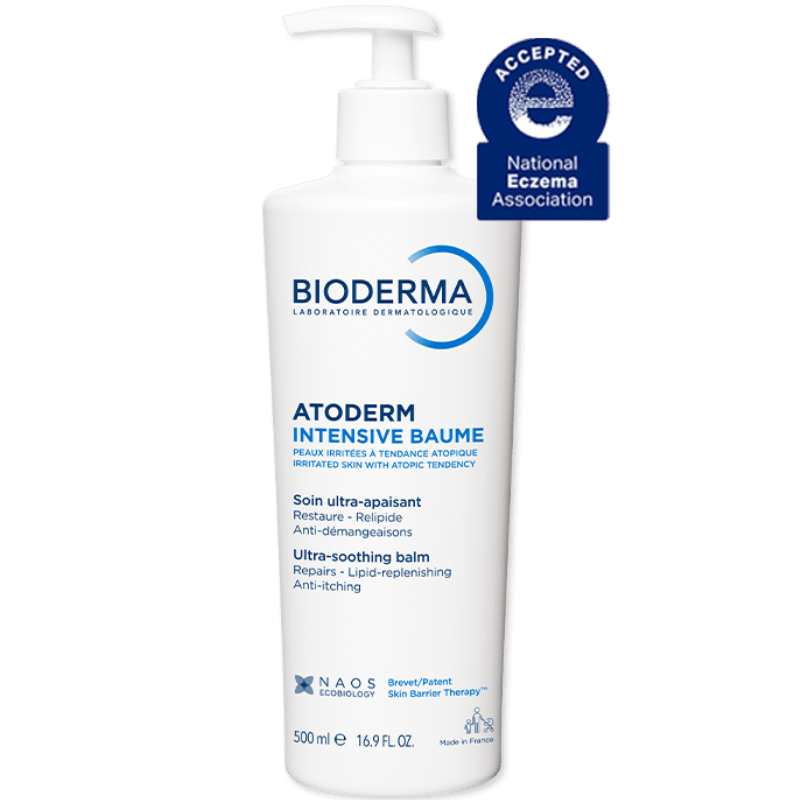
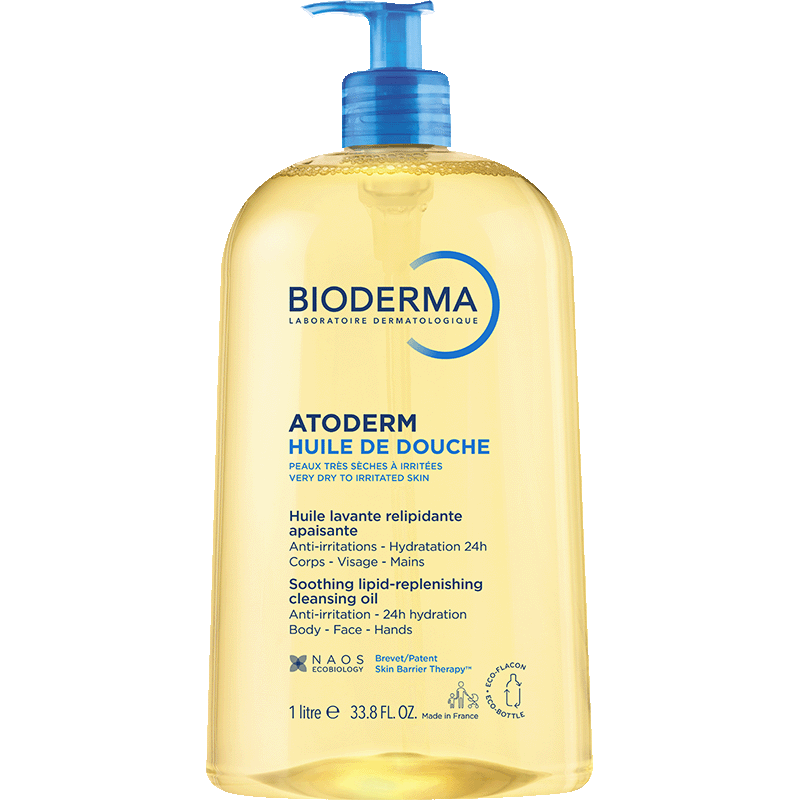
Within the ATODERM range, Atoderm Ultra Cream provides daily nourishment for normal to dry skin, with hydration increased by 28% after 24 hours. From the shower, Atoderm Shower Oil cleanses without stripping the skin barrier and increases skin hydration by 26% after 27 days. Both are fragrance-free and suited to dry to atopic-prone skin.


Common questions about ringworm and eczema


Is ringworm contagious but eczema is not?


Yes. Ringworm is a fungal infection that spreads through direct contact, contaminated objects and infected animals, whereas eczema is a non-infectious inflammatory condition that is not transmitted from person to person. The family clustering observed in atopic dermatitis comes from shared genetics, not from transmission.
 

Can eczema be mistaken for ringworm?


It happens often. Nummular eczema is the form most frequently mixed up with ringworm because its coin-shaped plaques look similar, and a KOH test of skin scrapings settles the question in minutes.
 

Going by appearance alone can add weeks before reaching the right care path, particularly when a steroid cream is applied to what is actually a fungal infection.


Can eczema turn into ringworm?

No. Eczema and ringworm are two distinct conditions, and eczema does not become a fungal infection. Repeated scratching affects the skin barrier and can allow secondary infections (bacterial more often than fungal), and a persistent lesion that progresses in someone with eczema may signal a secondary infection that needs separate treatment.


Scientific references


  1. Leung AKC, Lam JM, Leong KF, Hon KL. Tinea corporis: an updated review. Drugs Context. 2020;9:2020-5-6. https://pubmed.ncbi.nlm.nih.gov/32742295/
  2. Leung AKC, Lam JM, Leong KF, Leung AAM, Wong AHC, Hon KL. Nummular Eczema: An Updated Review. Recent Pat Inflamm Allergy Drug Discov. 2020;14(2):146-155. https://pubmed.ncbi.nlm.nih.gov/32778043/
  3. Rotta I, Otuki MF, Sanches AC, Correr CJ. Efficacy of topical antifungal drugs in different dermatomycoses: a systematic review with meta-analysis. Rev Assoc Med Bras. 2012;58(3):308-318. https://pubmed.ncbi.nlm.nih.gov/22735222/
  4. Lax SJ, Van Vogt E, Candy B, et al. Topical anti-inflammatory treatments for eczema: network meta-analysis. Cochrane Database Syst Rev. 2024;8(8):CD015064. https://pubmed.ncbi.nlm.nih.gov/39105474/
  5. Van Zuuren EJ, Fedorowicz Z, Christensen R, Lavrijsen APM, Arents BWM. Emollients and moisturisers for eczema. Cochrane Database Syst Rev. 2017;2(2):CD012119. https://pubmed.ncbi.nlm.nih.gov/28166390/


Author


Content written by the BIODERMA USA editorial team and medically reviewed by Anaïs Caldirola, Medical lead at NAOS, ensuring accuracy and scientific reliability. Medical information is based on established dermatological knowledge and peer-reviewed sources.